Commercial Floor Coating in Melbourne: What Every Business Needs to Know
Commercial floor coating in Melbourne is the process of applying a protective epoxy or polyurethane system over a concrete slab to produce a surface that handles heavy traffic, chemical spills, forklift loads and daily cleaning without cracking or peeling. Done properly, a quality coating lasts 10 to 20 years and costs far less than replacing a concrete floor.
Why do Melbourne businesses choose commercial floor coating over other options?
Commercial floor coating outlasts paint, vinyl and bare concrete in high-traffic environments because it bonds directly into the concrete rather than sitting on top of it. A well-applied two-coat epoxy system creates a surface that resists abrasion, most industrial chemicals and heavy point loads, which makes it practical for warehouses, workshops, retail spaces and food-production facilities alike.
Plain concrete is porous. Every time a forklift drops oil, a staff member spills a cleaning chemical or rainwater tracks in on boots, that moisture and contamination soaks straight into unprotected concrete. Over a couple of years the surface becomes stained, dusty and increasingly difficult to clean. A sealed epoxy coating closes that porosity completely, so spills sit on top and wipe up in seconds.
From a compliance angle, a smooth, sealed floor also helps businesses meet Workplace Health and Safety obligations around slip resistance and hygiene, particularly in food handling and manufacturing environments. Anti-slip additives can be broadcast into the topcoat during installation to hit the specific slip-resistance rating your site requires.
What types of commercial floor coating are used in Melbourne?
The most common commercial floor coatings are solvent-borne epoxy, water-borne epoxy, 100% solids epoxy and polyurethane topcoats. Each suits different environments. Solvent-borne systems offer strong penetration on older slabs; 100% solids epoxy builds maximum film thickness in one coat; polyurethane is preferred as a topcoat where UV exposure or chemical resistance is the priority.
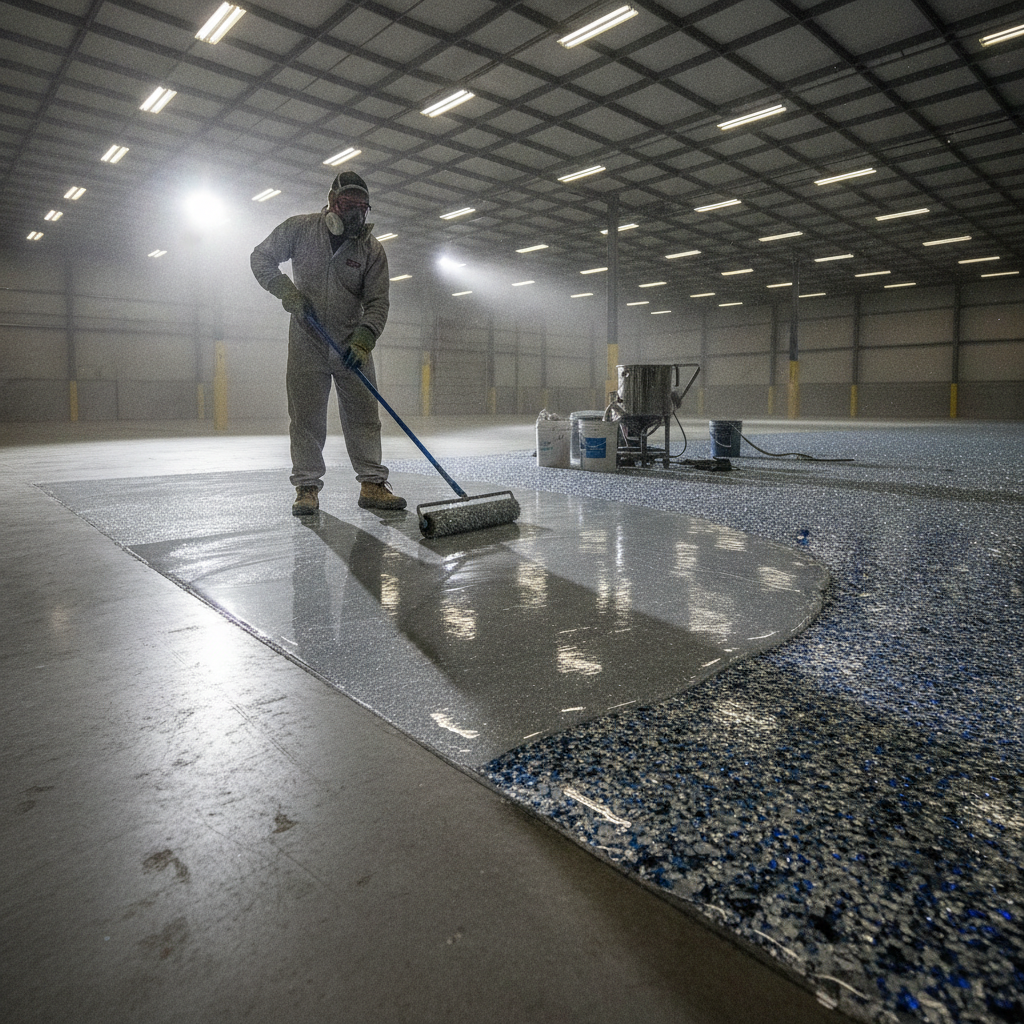
For most Melbourne commercial and industrial jobs, a multi-coat epoxy system is the standard approach. It typically involves a primer or penetrating seal, a basecoat, optional decorative elements like metallic flake or colour chips, and a clear polyurethane topcoat. That topcoat is what provides UV stability and scratch resistance at the wear surface.
Metallic flake systems, sometimes called flake or chip floors, are popular in showrooms, gyms and retail environments because they hide minor surface imperfections and add texture without looking industrial. The coloured vinyl flakes are broadcast into a wet basecoat and then locked under a clear topcoat, giving a finish that is both decorative and genuinely durable.
For heavy industrial environments, like food processing or chemical storage areas, a thicker 100% solids system with an anti-static or coved skirting detail is often the better call. The coating is applied at 2 to 3 mm thickness rather than the 300 to 600 micron range used for lighter commercial work.
How does surface preparation affect a commercial floor coating in Melbourne?
Surface preparation is the single most important step in any commercial floor coating job. Poor prep is the reason coatings fail, peel or bubble within months. The concrete must be mechanically abraded (usually by diamond grinding or shot blasting) to open the surface profile, remove laitance and give the primer something to grip onto. No amount of premium product fixes a poorly prepared slab.
Moisture is the other big issue. Melbourne’s variable climate means concrete slabs, especially older ones poured without a proper vapour barrier, can carry moisture vapour that rises up through the slab. If an epoxy coating is applied over a slab with a moisture vapour emission rate above the product’s tolerance, the coating will blister and delaminate. A reputable contractor will test moisture levels before committing to a system and will specify a moisture-tolerant primer if readings are elevated.
Cracks, control joints and spalled areas all need attention before coating. Hairline cracks can be filled with a rigid epoxy grout; wider moving cracks get a flexible polyurethane sealant that can flex with the joint rather than transmit stress into the rigid coating above.
How long does a commercial floor coating take, and what downtime should a business expect?
Most commercial floor coating jobs in Melbourne take two to three days from surface preparation through to final cure, though actual foot-traffic clearance is typically 24 hours after the final coat. Full chemical and mechanical cure, where the floor reaches its rated hardness, takes around seven days. Planning the job over a weekend or a planned shutdown avoids operational disruption for most businesses.
The prep day is usually the noisiest and most disruptive. Diamond grinders and shot blasters generate dust, vibration and noise, so scheduling that phase when neighbouring businesses or your own staff are not on site is worth planning for. Most contractors can stage the work in sections so that parts of a large floor remain in use while others cure.
Temperature and humidity matter too. Epoxy products have working temperature windows, typically between 10°C and 30°C, and relative humidity limits. Melbourne summer days can push ambient temperatures high enough to shorten pot life significantly, so experienced applicators start early in the morning during warmer months.
What should you look for when choosing a commercial floor coating contractor in Melbourne?
Look for a contractor who conducts a proper site assessment rather than quoting from a photo or a rough square-metre figure over the phone. A good applicator will check the slab age, finish, moisture content and any previous coatings before recommending a system. They should be able to tell you which product brand and system they are using, not just offer a generic “epoxy floor.”
Ask for a written scope that covers surface preparation method, primer type, number of coats, film thickness per coat, topcoat product and expected cure schedule. That document protects you if disputes arise and tells you immediately whether the contractor actually understands the work involved.
References from similar commercial or industrial jobs nearby are worth requesting. A contractor who has coated similar floors in Melbourne’s industrial suburbs, whether that’s Braeside, Dandenong, Campbellfield or Sunshine, will be familiar with the types of slabs, the climate conditions and the logistical constraints common to those sites.
Warranty terms are another telling detail. A reputable contractor will offer a workmanship warranty on adhesion and delamination. Be cautious of operators who offer no warranty or who make it conditional on conditions so narrow they are effectively unenforceable.
How much does commercial floor coating cost in Melbourne?
Commercial floor coating in Melbourne generally ranges from around $25 to $70 per square metre depending on system type, slab condition and floor area. A basic single-colour epoxy system on a well-prepared slab sits toward the lower end; a decorative metallic flake system with a polyurethane topcoat on a slab needing significant remediation will sit toward the higher end. Large floor areas attract lower per-square-metre rates due to the efficiency of working in open space.
The cheapest quote is rarely the best outcome on a commercial floor. If a contractor is significantly lower than others, the saving is almost always coming from thinner coats, skipped primer, minimal surface prep or lower-grade product. Any of those shortcuts shortens the coating’s life and increases the cost of premature failure. A floor that needs recoating after three years instead of lasting fifteen has cost you far more than the difference in the original quote.
Get at least two or three detailed quotes and compare what each scope actually includes before making a decision. The investment in a quality commercial floor coating pays off every year through easier cleaning, fewer slip incidents and a floor that simply keeps looking the part.
Get a commercial epoxy floor coating quote from Metal and Flake.