Epoxy Flooring Rates in Melbourne: A Straight-Talking Breakdown
Epoxy flooring rates in Melbourne typically range from around $40 to $120 per square metre, depending on the system chosen, the condition of the existing slab, and the complexity of the job. Decorative finishes like metallic or flake systems sit toward the higher end, while single-coat industrial epoxy sits lower. Most residential jobs fall somewhere in the $60 to $90 per square metre bracket once prep and materials are included.
What factors push epoxy flooring rates up or down?
Epoxy flooring rates shift based on four main variables: the condition of the concrete, the system being applied, the size of the area, and access to the site. A freshly poured, flat slab in an open garage is the simplest job. A cracked, contaminated, or previously coated slab in a tight space will cost more because it needs more work before a single drop of epoxy goes down.
Here is a plain breakdown of what moves the needle on price:
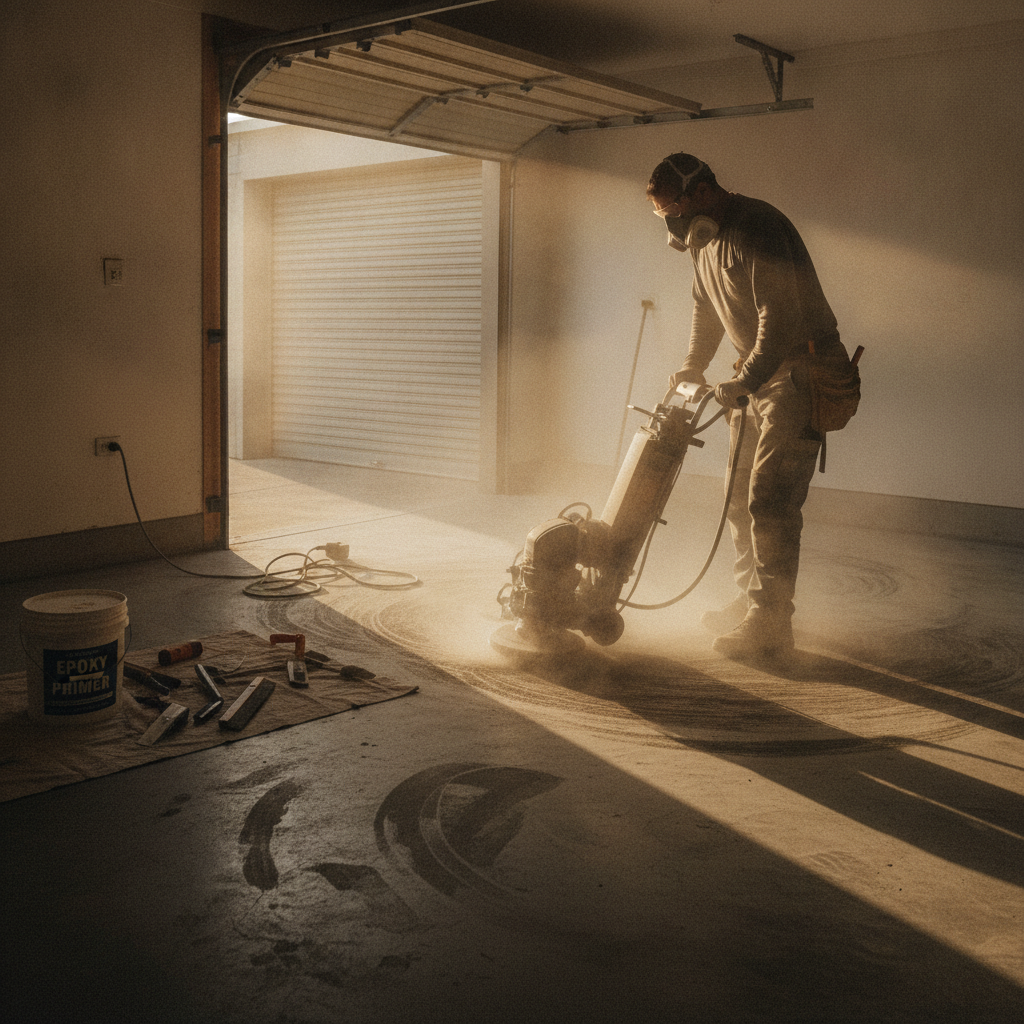
- Concrete preparation. This is the big one. Diamond grinding or shot blasting to open up the slab surface is not optional. It is what makes the coating stick for a decade rather than peel in a year. If a contractor skips it or charges nothing for it, that is a red flag. Prep alone can account for 30 to 40 percent of the total job cost.
- Moisture in the slab. Melbourne’s older homes and commercial buildings often have slabs with no moisture barrier underneath. High moisture vapour transmission rates can cause adhesion failure. Dealing with it properly means using a moisture-tolerant primer or a specialist barrier coat, which adds cost but saves a blowout later.
- The system itself. A plain two-part epoxy paint is cheap. A full broadcast vinyl flake or a metallic pigment system with a polyurethane topcoat is a multi-layer process that takes two or more days and uses significantly more material. You are paying for that durability and finish quality.
- Area size. Larger jobs bring the per-square-metre rate down because setup costs, machinery hire, and travel time are spread across more floor. A 20 sqm garage will cost more per square metre than a 200 sqm warehouse floor.
- Access and obstacles. Multiple cars to move, floor drains to mask, columns to work around, stairs, or a site on the upper floor of a building all slow the job down and add to the rate.
What does a typical residential garage epoxy floor cost in Melbourne?
For a standard single or double garage in Melbourne, expect to pay between $1,500 and $3,500 for a quality epoxy flooring job. A single garage at roughly 18 to 20 sqm with a vinyl flake system and polyurethane topcoat generally lands around $1,800 to $2,400. A double garage at 35 to 40 sqm in the same system typically comes in between $2,500 and $3,500, depending on slab condition.
These are real-world numbers, not teaser rates. Budget quotes you see advertised at $25 per square metre rarely include proper diamond grinding, two coats of epoxy, and a UV-stable topcoat. When you add those in, the “cheap” job often catches up to the proper price, except you find out after things start peeling.
It is worth knowing that the Epoxy flooring industry in Australia has no licensing requirement for the work itself. That means anyone can buy a roller and some hardware store epoxy and call themselves an installer. The difference between a floor that lasts 10 years and one that starts delaminating in 18 months comes down almost entirely to surface preparation and product quality, not the branding on the truck.
How do commercial epoxy flooring rates compare to residential?
Commercial epoxy flooring rates in Melbourne are often lower per square metre than residential rates because the jobs are larger and simpler in layout. A warehouse or factory floor at 500 sqm or more can come in at $35 to $60 per square metre for a heavy-duty industrial system, depending on the specification. Smaller commercial spaces, food-grade kitchens requiring a self-levelling system with coved skirtings, or showrooms wanting a high-gloss decorative finish will sit higher.
Commercial clients also need to factor in downtime. Most epoxy systems need 24 hours before light foot traffic and 72 hours before vehicle traffic, so timing the work around business operations matters. Some products, including certain fast-cure polyurethane-modified systems, can be walked on in as little as 8 to 12 hours, but they carry a premium on the material cost.
A coved skirting detail, which is common in commercial kitchens and food manufacturing, adds time and labour because the applicator is essentially hand-forming a curved transition between floor and wall. That detail alone can add $15 to $25 per lineal metre to the quote.
Why do epoxy flooring quotes vary so much between contractors?
Epoxy flooring quotes vary because contractors are often quoting completely different scopes of work. One quote might include diamond grinding, a moisture primer, two coats of epoxy, a full vinyl flake broadcast, and a two-part polyurethane topcoat. Another quote might mean one thin coat of single-part epoxy rolled over an unprepped slab. Both quotes might say “epoxy floor” on them. That is the core problem with comparing prices in this trade.
When you are comparing quotes, ask each contractor to specify:
- The preparation method (diamond grinding is the standard. Acid etching alone is not sufficient for a long-lasting bond).
- The number of coats and the product brand and system being used.
- The dry film thickness of the finished system in microns.
- What the warranty covers and for how long.
A professional installer will not hesitate to answer those questions. Someone cobbling together a quote from whatever is on the shelf at the trade store probably will.
Is a cheaper epoxy floor ever the right choice?
Sometimes a lower-spec system is genuinely appropriate. A garden shed floor that sees light foot traffic and the occasional wheelbarrow does not need the same system as a busy mechanic’s workshop. A single-part, water-based epoxy coating at the lower end of the price range is fine for low-traffic utility spaces where aesthetics are not a priority and you accept you may need to recoat in five to seven years.
For anything that will take vehicle traffic, chemical exposure, hot tyres, heavy drops, or daily cleaning with commercial products, a full two-part solvent-free or solvent-based epoxy with a polyurethane topcoat is the minimum. Cutting corners on a garage floor that parks a car every day, or a kitchen that gets hosed down nightly, ends up costing more in the long run when you are grinding it back and starting again in two years.
The smartest thing you can do before making a decision on price is get a detailed, itemised quote that breaks out prep, materials, labour, and any return visit for the topcoat. That way you are comparing like with like, and you know exactly what you are getting for your money.
Request a detailed epoxy flooring rate quote