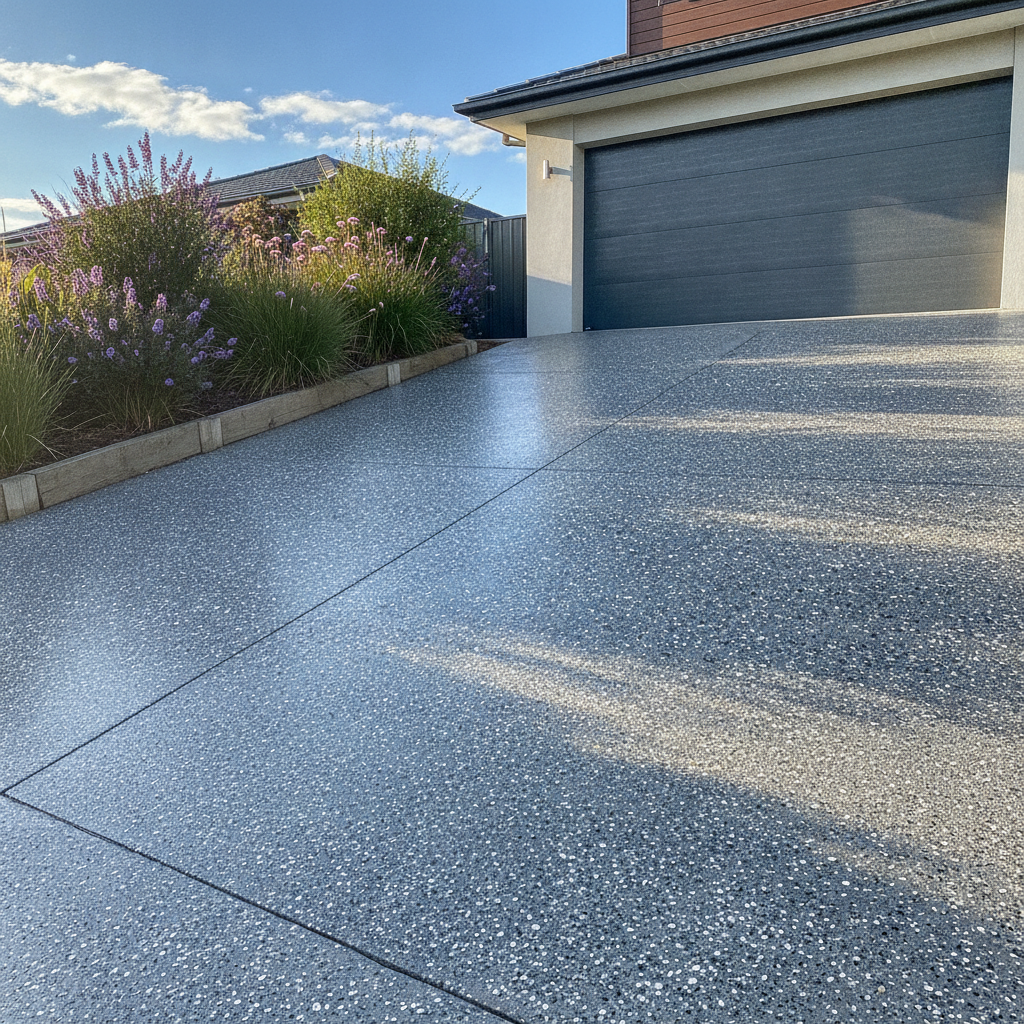
Epoxy Driveway Coatings in Melbourne: Are They Worth It?
An epoxy driveway coating is worth it for most Melbourne homeowners who want a hard-wearing, low-maintenance surface that handles oil, tyre marks and UV exposure better than bare concrete. Properly applied over a prepared slab, a quality epoxy system can last 10 to 15 years before needing a recoat, making the upfront cost reasonable over its lifetime.
What exactly is an epoxy driveway coating?
An epoxy driveway coating is a two-part resin system, a base resin and a hardener, that bonds chemically to a concrete substrate and cures into a rigid, seamless surface. Unlike paint, which sits on top of the concrete, epoxy penetrates the surface pores and locks in, giving you a coating that won’t peel or flake under normal vehicle traffic and weather conditions.
The system typically includes a penetrating primer coat, a pigmented body coat and a clear topcoat sealer. Decorative flake or metallic pigments are broadcast into the wet body coat before the topcoat goes down, which is exactly the kind of finish Metal and Flake specialise in for Melbourne garages and floors. The same product chemistry applies to driveways, though the formulation needs to be chosen with outdoor UV stability in mind.
One key distinction worth knowing: not all epoxies are created equal for outdoor use. Standard solvent-based epoxies can amber and chalk under direct Melbourne sun. Polyaspartic or polyurethane topcoats are often specified over an epoxy base on driveways precisely because they hold their colour and gloss far longer outdoors.
How does an epoxy driveway hold up in Melbourne’s climate?
Melbourne’s climate, with its wide temperature swings, occasional heatwaves pushing past 40°C and UV index regularly hitting 11 or 12 in summer, is genuinely tough on surface coatings. A well-specified epoxy driveway system handles these conditions well, provided the concrete substrate is properly prepared and an aliphatic (UV-stable) topcoat is used rather than a basic aromatic epoxy clear.
Concrete driveways expand and contract with temperature changes. Any existing cracks in the slab will need to be chased out and filled with a flexible filler before coating, because epoxy is rigid and will telegraph movement straight through a thin film if the prep work is skipped. This is the single most common cause of premature failure on driveway epoxy jobs, not the product itself but cutting corners on surface preparation.
On the positive side, epoxy is chemically resistant. Petrol, oil, brake fluid and fertiliser runoff from the garden all wipe off a cured epoxy surface without staining, which is a genuine advantage over exposed aggregate or plain concrete that soaks up every drip. In a city where cars sit on driveways for years, that matters.
What does an epoxy driveway cost in Melbourne?
Pricing for an epoxy driveway in Melbourne generally sits between $40 and $80 per square metre for a quality two-to-three coat system, depending on the size of the area, the condition of the existing concrete and the finish chosen. A standard double-car driveway of around 40 square metres would typically come to somewhere between $1,600 and $3,200 fully installed.
That range sounds wide, but the variables are real. A slab with significant cracking, oil contamination or a previous coating that needs grinding off will take more labour hours before a single drop of epoxy goes down. Shot-blasting or diamond-grinding the surface to the right profile (typically a CSP 3 to 4 profile, meaning it feels like coarse sandpaper to the touch) is non-negotiable for proper adhesion, and that equipment hire and labour cost shows up in the quote.
Compare that against resurfacing with plain concrete (roughly $50 to $80 per square metre just for the pour) or exposed aggregate (often $100 per square metre or more), and a properly installed epoxy driveway starts to look like reasonable value, especially when you factor in how little maintenance it needs afterwards.
How long does an epoxy driveway last before it needs attention?
A quality epoxy driveway system installed on a properly prepared slab typically lasts 10 to 15 years under normal residential use before the topcoat needs refreshing. The base coat can often remain sound for much longer. Regular maintenance is straightforward: a rinse with a garden hose, an occasional scrub with a mild detergent and a pressure wash once or twice a year is all that’s needed.
The finish will show fine surface scratches over time, particularly from gravel dragged under tyres, which is completely normal for any hard coating. A light recoat of the topcoat layer every seven to ten years will keep the surface looking sharp without the expense of stripping and starting again from scratch.
One practical tip: avoid parking a hot vehicle on fresh epoxy during the first week of cure. The resin is still reaching full hardness and tyre marks can imprint under concentrated heat loads. After a full cure, that concern disappears entirely.
Is an epoxy driveway slippery when wet?
A plain gloss epoxy surface can be slippery when wet, which is a legitimate concern for a driveway where people are walking. The straightforward fix is to broadcast a small quantity of aluminium oxide anti-slip aggregate into the topcoat before it cures. This creates a micro-texture that is barely visible to the eye but noticeably improves grip underfoot, even in Melbourne’s rainy winters.
A broadcast flake finish, where colour flakes are scattered across the surface, also adds natural texture that reduces slip risk compared to a flat gloss coat. Most professional epoxy applicators will offer anti-slip options as a standard part of a driveway specification. If a quote doesn’t mention it, ask about it.
What should you look for in an epoxy driveway installer?
The quality of the installation determines the outcome far more than the brand of product used. When getting quotes, ask every installer three specific questions. First, how will they prepare the surface (the answer should involve mechanical grinding or shot-blasting, not acid etching alone, which is insufficient for driveways). Second, what is the total dry film thickness of the system they are applying (a driveway system should be at least 300 to 500 microns total). Third, what topcoat chemistry are they using and is it UV-stable for outdoor use.
If an installer can’t answer those questions clearly, that tells you something important about their process. A good installer will also inspect the slab for moisture before quoting, because high moisture vapour transmission through a concrete slab is one of the leading causes of delamination on any epoxy coating job.
Metal and Flake work across Melbourne and surrounds, applying decorative epoxy systems to residential and commercial floors. If you’re weighing up whether your driveway is a good candidate for a coating, the best starting point is getting a site-specific quote so you know exactly what you’re working with.
Get a driveway epoxy quote