Epoxy Resin Flooring Explained: Types, Costs and Benefits
Epoxy resin flooring is a hard-wearing floor coating made by mixing a resin with a hardener. The two components react chemically and bond tightly to concrete, creating a surface that resists impact, chemicals, moisture and heavy traffic. It comes in several distinct systems, each suited to a different setting, budget and finish preference.
What are the main types of epoxy resin flooring?
The main types of epoxy resin flooring are solid-colour epoxy, metallic epoxy, flake or chip epoxy, mortar epoxy and self-levelling epoxy. Each system uses the same resin-and-hardener chemistry but varies in thickness, aggregate, finish and the kind of surface it produces. Choosing the right type comes down to your space, how it gets used and the look you want.
Here is a plain-language rundown of each one:
- Solid-colour epoxy. A clean, single-colour coating applied at around 300 to 500 microns. Simple, affordable and works well in workshops, warehouses and utility areas where appearance is secondary to function.
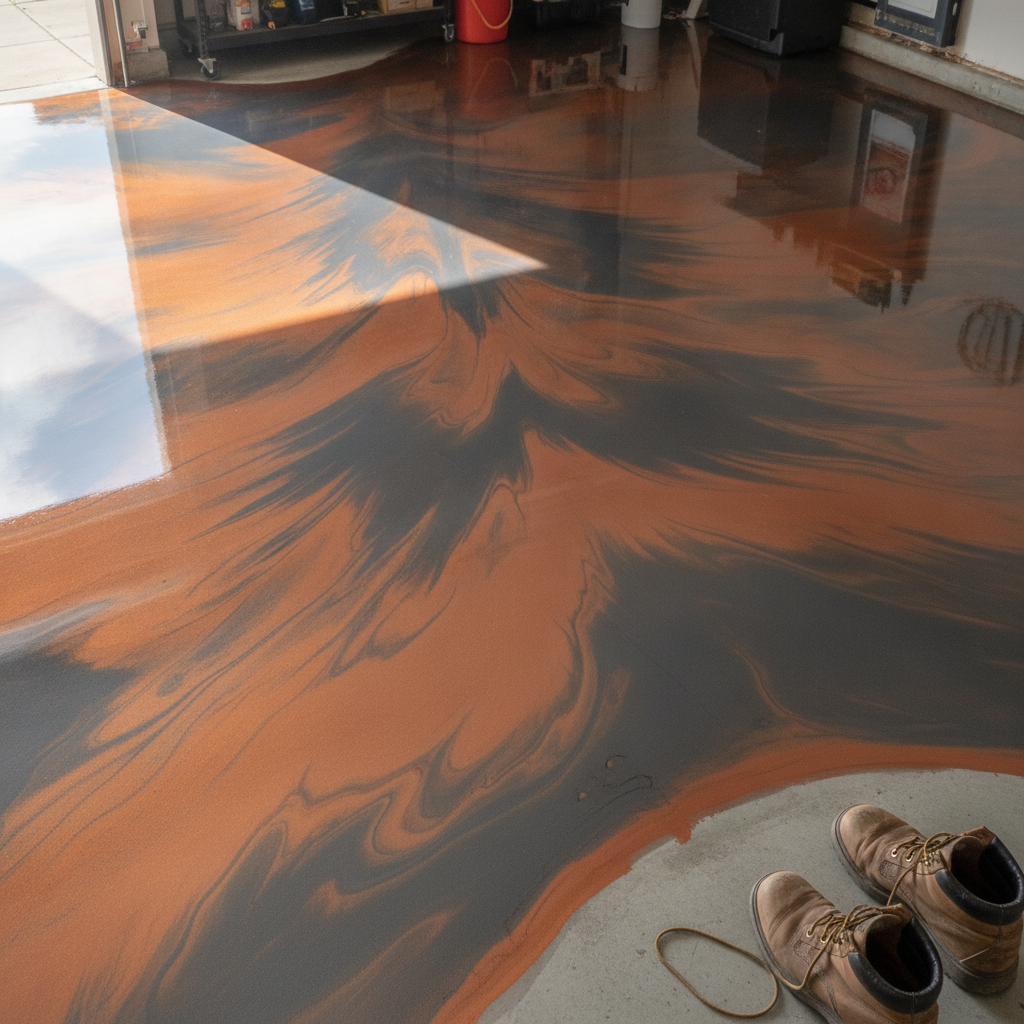
- Metallic epoxy. A pigmented system that creates flowing, three-dimensional patterns, often resembling polished stone or liquid metal. The pigment moves as the epoxy self-levels, so no two floors are identical. Popular in showrooms, cafes and upmarket residential spaces.
- Flake or broadcast epoxy. Coloured vinyl flakes are broadcast into a wet epoxy base coat, then locked in under clear topcoats. The result is a slip-resistant, speckle-textured floor that hides dirt well and suits garages, gyms and commercial kitchens.
- Mortar epoxy. The thickest system, combining epoxy with graded quartz or sand aggregate. Applied at 6 mm or more, it handles the heaviest industrial punishment and can resurface badly damaged concrete.
- Self-levelling epoxy. A pourable formulation that flows across a substrate and settles into a glassy, seamless finish. Ideal for food production areas and laboratories because there are no joints for bacteria to hide in.
In Melbourne, the most popular residential choice by far is the flake system, partly because it handles the temperature swings between summer heat and winter cold better than a plain solid coat, and partly because it looks sharp in a garage or home gym without breaking the budget.
How much does epoxy resin flooring cost in Melbourne?
In Melbourne, epoxy resin flooring typically costs between $40 and $120 per square metre installed, depending on the system, the condition of the existing concrete and the size of the job. A standard flake system in a double garage of around 36 square metres usually lands in the $1,800 to $3,200 range. High-end metallic systems in smaller, detailed spaces can push beyond $120 per square metre.
Several variables move the price up or down:
- Concrete preparation. Diamond grinding is non-negotiable for proper adhesion. If the slab has old paint, sealers, cracks or moisture issues, prep work takes longer and costs more. Skipping prep is the single biggest reason epoxy floors peel within a year.
- Number of coats. A quality job includes a primer, one or two base coats and at least one clear topcoat. Budget quotes often cut one of those layers, which shows up as early wear.
- Product grade. Solvent-free, 100 percent solids epoxy costs more to purchase than water-based alternatives, but it bonds harder, lasts longer and does not shrink as it cures.
- Access and obstacles. Working around built-in shelving, floor drains or existing fitout adds time.
It is worth getting at least two detailed quotes that specify the system, the number of coats and the prep method. A quote that does not mention surface preparation is a red flag worth taking seriously.
What are the practical benefits of epoxy resin flooring?
The practical benefits of epoxy resin flooring include exceptional durability, chemical resistance, ease of cleaning, slip resistance (when textured aggregate is added) and a lifespan that routinely reaches 10 to 20 years with basic maintenance. It also seals porous concrete against oil stains, dusting and moisture vapour, which alone makes it worth considering for any working garage or warehouse.
Let us break those benefits down into everyday terms:
It handles real punishment. A properly installed flake or mortar epoxy system can carry forklift traffic, steel tool trolleys and vehicle loads without cracking or chipping. Residential garage floors take car jacks, dropped spanners and spilt engine oil in their stride.
It stops concrete dust. Bare concrete sheds fine grey dust constantly. That dust settles on everything in the space and plays havoc with machinery filters. A sealed epoxy floor eliminates the problem completely.
It is genuinely easy to clean. A sealed epoxy surface has no pores for grime to grip. A mop with warm water and a pH-neutral cleaner is all you need for most spills. Petrol, brake fluid and cooking grease wipe off without staining.
It reflects light. A glossy epoxy finish can meaningfully brighten a dim garage or workshop by bouncing overhead lighting around the room, which reduces the need for additional fittings.
It adds value. A well-presented garage or commercial fitout photographs better and reads as more professional to buyers, tenants or customers. For a relatively modest outlay, you are improving both the function and the presentation of a space.
How long does epoxy resin flooring actually last?
Epoxy resin flooring installed over properly prepared concrete typically lasts 10 to 20 years in residential settings and 5 to 10 years in high-traffic commercial or industrial environments before a topcoat refresh is needed. The biggest factors affecting longevity are surface preparation quality, product grade and UV exposure, since standard epoxy yellows under direct sunlight without a UV-stable polyurethane topcoat.
A few maintenance habits extend the life significantly. Felt pads under heavy furniture legs stop point-load scratches. Cleaning up chemical spills promptly, especially anything acidic, protects the topcoat. And avoiding dragging sharp metal edges across the floor keeps the finish looking sharp for years longer.
If yellowing under sunlight is a concern, your installer should be specifying a polyaspartic or polyurethane clear coat rather than a straight epoxy topcoat. Those products handle UV far better and are now standard practice in quality commercial installs.
Is epoxy resin flooring right for your space?
Epoxy resin flooring suits most concrete slabs in garages, workshops, warehouses, gyms, showrooms and commercial kitchens. It is not ideal for timber subfloors, for slabs with active rising damp that has not been addressed, or for outdoor areas with constant direct sun unless paired with a UV-stable topcoat. When those conditions are met, it is one of the most cost-effective floor upgrades available.
The spaces where it really earns its money are the ones that see daily use: a home garage that doubles as a workshop, a gym floor that takes rubber weights and machine feet, or a commercial kitchen that needs a seamless, chemical-resistant surface that passes a health inspection without drama.
If you are weighing up whether your specific slab and space are good candidates, the honest answer is that a quick site visit tells you far more than any online guide. Concrete condition, moisture readings and the existing surface all matter, and they can only be assessed in person.
Book a free epoxy flooring consult