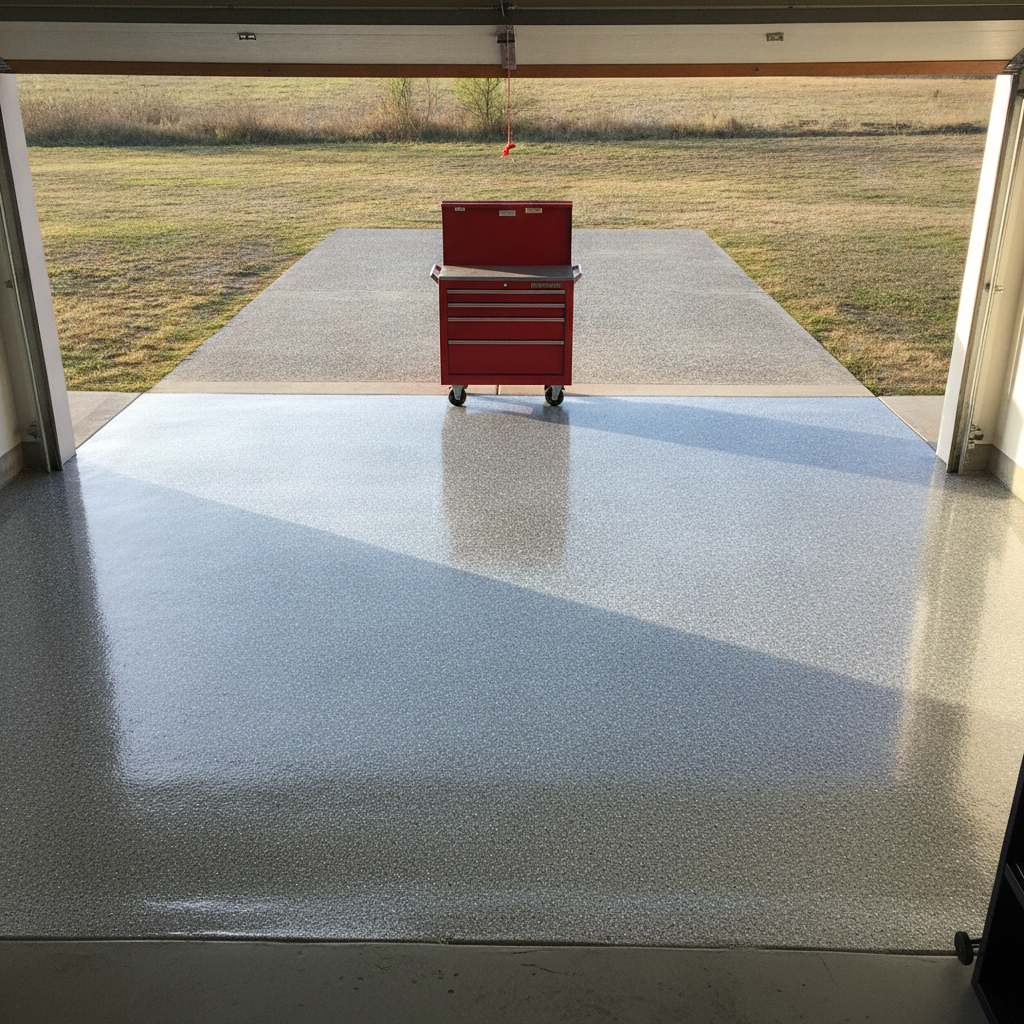
Garage Floor Epoxy in Melbourne: What You Need to Know
Garage floor epoxy is a two-part resin coating that bonds directly to concrete, creating a tough, seamless surface that resists oil, tyre marks, abrasion and moisture. For Melbourne homeowners, it turns a cracked, dusty slab into a clean, durable floor that holds up to daily use and still looks sharp years later.
What exactly is garage floor epoxy and how does it work?
Garage floor epoxy is a thermosetting resin made by mixing a resin base with a hardener. When the two parts combine and are applied to prepared concrete, a chemical reaction creates a rigid, plastic-like surface that is far harder and more adhesion-resistant than paint or sealers. The cured coating bonds at a molecular level with the concrete, which is why proper surface preparation is what separates a coat that lasts a decade from one that peels within a year.
There are a few main product types you will come across. Water-based epoxy is easier to apply and low in odour, but it is thinner and best suited to light foot traffic or as a primer coat. Solvent-based epoxy is stronger and more chemical-resistant, but the fumes require serious ventilation. 100% solids epoxy has no solvents at all: every drop you put down stays down, giving you the thickest, hardest-wearing film. Most professional garage floor jobs in Melbourne use 100% solids as the base coat for exactly that reason.
Why does surface preparation matter so much for garage floor epoxy?
Surface preparation is the single biggest factor in whether a garage floor epoxy coating succeeds or fails. Epoxy needs a clean, open, slightly rough concrete profile to grip onto. Without it, moisture vapour, oil contamination or a sealed surface will cause the coating to delaminate, often within months. No amount of premium product fixes bad prep.
The standard professional method is diamond grinding. A walk-behind grinder with diamond-segment heads cuts back the top surface of the slab, opens up the concrete pores and removes any previous sealers, paint, adhesive residue or surface laitance. Shot-blasting is another method used on large areas. Both produce what the industry calls a Concrete Surface Profile (CSP) of around CSP 2 to CSP 3, which is the texture range most epoxy manufacturers specify for a reliable bond.
Cracks and spalling need to be filled before coating. Small hairline cracks can be routed out and filled with a rigid epoxy filler. Larger structural movement cracks are a different story: an epoxy coating will not bridge active movement, so those need assessment before any coating work starts. Oil stains are the other common headache in a garage environment. Even a stain that looks dry can hold enough petroleum residue below the surface to prevent adhesion. Degreasing and sometimes grinding back through the contaminated zone is the only reliable fix.
What finish options are available for a garage floor epoxy?
The most popular choice for Melbourne garages is a flake or chip finish, where coloured vinyl flakes are broadcast into the wet epoxy base coat and then sealed under a clear polyurethane or polyaspartic topcoat. Flake floors hide minor imperfections, add grip underfoot and come in hundreds of colour combinations. A metallic epoxy finish is the other standout option: metallic pigments swirled through the wet resin create a three-dimensional, almost liquid look. Both are sealed with a topcoat that determines the final sheen level, from satin to a high-gloss mirror finish.
For garages that see heavy vehicle traffic, a polyaspartic topcoat is worth knowing about. Polyaspartic cures faster than traditional epoxy topcoats (some formulas reach 80% hardness within a few hours), resists UV yellowing better and handles temperature extremes well. Melbourne’s swinging seasons, from freezing Dandenong Ranges mornings to scorching 40-plus-degree western suburbs afternoons, make UV and thermal stability genuinely useful features rather than marketing talk.
How long does garage floor epoxy take to install and when can you use it?
A professional garage floor epoxy installation in a standard double garage (roughly 36 to 40 square metres) typically takes one to two days on site, spread across two visits. Day one covers grinding, crack repair and the base coat. Day two, once the base has cured to a tack-free state, covers the topcoat. Light foot traffic is usually possible 24 hours after the final coat. Vehicle traffic needs to wait longer: most product data sheets specify 72 hours before driving on the floor, and a full seven-day cure before returning heavy items or parking a vehicle that sits stationary for extended periods, such as a classic car on jack stands.
Temperature matters during application. Epoxy should not be applied when the slab or air temperature is below 10 degrees Celsius, because the chemical reaction that drives curing slows dramatically in the cold. Melbourne winters can push morning slab temps well under that threshold, especially in south-facing garages. A good installer will check slab temperature with a contact thermometer before mixing product, not just glance at the weather app.
What does garage floor epoxy cost in Melbourne?
Professionally installed garage floor epoxy in Melbourne generally ranges from around $50 to $120 per square metre, depending on the system chosen, the condition of the existing slab and the complexity of the job. A basic single-colour system with minimal prep sits at the lower end. A full flake or metallic system with diamond grinding, crack repairs and a polyaspartic topcoat sits toward the upper end.
DIY kits are available from hardware stores for well under $200, but the trade-off is a thinner film, limited colour options and the very real risk of peeling if the prep is rushed or the product is applied outside its temperature window. A professional coating applied correctly is expected to last 10 to 20 years with basic maintenance. A poorly applied DIY coat may need stripping and redoing within two to three years, which costs more in the long run than getting a professional in from the start.
How do you maintain a garage floor epoxy once it is down?
Maintaining a garage floor epoxy coating is refreshingly low-effort compared to bare concrete. Regular sweeping or blowing out dust and debris is the main task. For deeper cleaning, a mop with warm water and a pH-neutral cleaner is all you need. Avoid bleach-based cleaners and strong solvents: they can dull the topcoat over time. Oil drips from a leaky vehicle should be wiped up promptly rather than left to sit, not because they will penetrate a cured epoxy surface, but because they make the floor slippery and can stain the finish if they soak into a topcoat scratch.
Placing rubber mats under motorcycle side-stands or jack stands is a good habit. Concentrated point loads from sharp metal edges can dent or scuff any floor coating. Furniture leg pads under shelving units and tool cabinets serve the same purpose. Beyond that, an epoxy floor largely looks after itself.
If you are ready to stop sweeping dust off bare concrete and start actually enjoying your garage, Book a garage floor epoxy consult.