5 Garage Floor Coating Options Compared for Melbourne Homes
Garage floor coatings protect concrete from oil, moisture, tyre marks and daily wear while making your space look sharp. The five main options are epoxy, polyurea, polyaspartic, concrete paint and interlocking floor tiles. Each suits a different budget, use case and timeline, so comparing them side by side saves you from a costly redo down the track.
What makes epoxy the most popular garage floor coating in Melbourne?
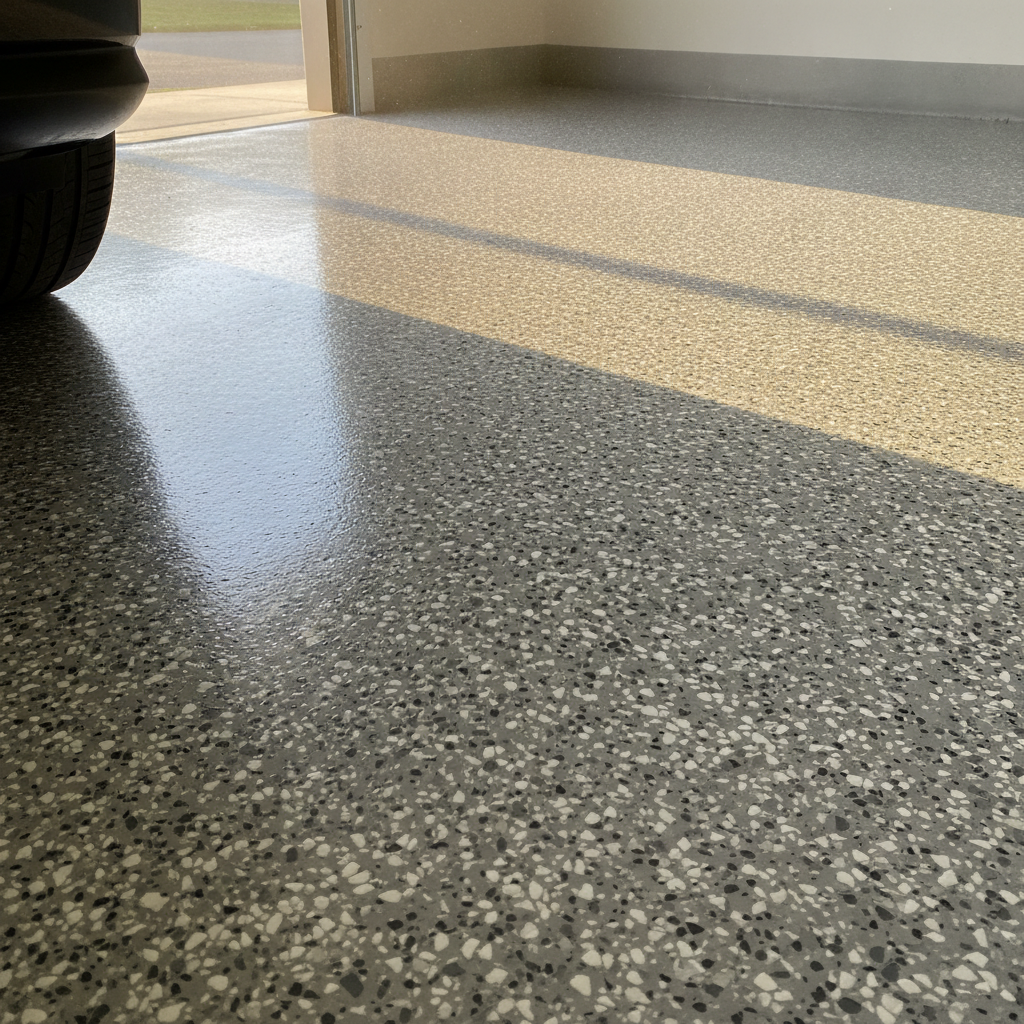
Epoxy is the most popular garage floor coating because it bonds directly to concrete, creates a hard and seamless surface, and handles heavy vehicle and foot traffic over the long term. It can be finished with decorative flake or metallic pigments, giving a professional result at a price point that works for most residential garages in Melbourne.
Epoxy is a two-part system: a resin and a hardener. When mixed and applied to prepared concrete, a chemical reaction creates a surface that is far tougher than anything that comes out of a paint tin. A standard broadcast flake epoxy system typically runs between 2 mm and 3 mm thick when you include the base coat, broadcast layer and topcoat, compared to a coat of floor paint that might be 0.1 mm at best.
The flake finish that Metal and Flake specialise in serves a practical purpose too. The texture from the flake broadcast adds a non-slip element underfoot, which matters in a Melbourne garage where morning condensation and the odd water splash are facts of life. You can also choose full-flake coverage to hide minor imperfections in the slab, or a partial broadcast for a speckled look that shows more of the base colour.
Cure time is the main thing to plan around. A properly catalysed epoxy system needs around 24 hours before foot traffic and at least 72 hours before you drive a car back in. Rush that and you risk tyre marks that become permanent. Done right, a quality epoxy floor in a residential garage can last 10 to 20 years with minimal maintenance.
How does polyurea compare to epoxy as a garage floor coating?
Polyurea is a flexible, fast-curing coating that reaches full hardness in a matter of hours rather than days, and handles UV exposure better than standard epoxy. It is often used as a topcoat over an epoxy base coat in a hybrid system, combining the adhesion and build of epoxy with the durability and speed of polyurea to get the best of both materials.
On its own, pure polyurea is harder to apply than epoxy because it cures so quickly. Professional applicators need to move fast, which is why it is rarely a DIY job. Its flexibility also means it can handle concrete that expands and contracts slightly with Melbourne’s seasonal temperature swings without cracking or delaminating, which is a real advantage in older slabs.
Cost tends to be higher than a straight epoxy system, but the trade-off is a faster return to service and a surface that won’t yellow under the harsh UV that comes through uninsulated garage roller doors. If you use your garage daily and can’t afford downtime, the faster cure is genuinely worth the extra spend.
What is a polyaspartic coating and is it worth it for a home garage?
Polyaspartic coatings are a subgroup of polyurea chemistry. They cure fast like polyurea but are a little more forgiving to apply, making them suited to single-coat or thin-build systems. They are UV-stable, highly scratch-resistant and can often be applied and walked on the same day, which is useful for homeowners who need their garage back quickly.
The catch is that polyaspartic is a thinner build than a full epoxy system. On a rough or pitted slab, a polyaspartic coat alone may not fill imperfections the way a multi-coat epoxy system can. For a well-prepared, relatively smooth slab it works brilliantly. For a garage that has seen years of oil spills and concrete repairs, a thicker epoxy base coat underneath is the smarter starting point.
How do concrete paint and floor tiles stack up against proper garage floor coatings?
Concrete paint and interlocking floor tiles are the two budget-entry options for garage floors, but both come with significant limitations compared to a bonded coating system. Paint peels, tiles shift and lift, and neither provides the seamless, chemical-resistant surface that a professionally applied coating delivers over the long run.
Concrete paint, often sold at hardware chains as a one-pot solution, is the cheapest option upfront. It’s easy to apply over a weekend, but it sits on the surface rather than bonding chemically into the concrete. In a working garage, you’ll typically see peeling and tyre marks appear within one to three years, especially in a Melbourne climate where temperature cycles are pronounced. Most people who go this route end up paying for a proper coating anyway, so the savings are short-lived.
Interlocking PVC or rubber tiles solve the problem of installation time. You can lay them in a few hours, and they don’t require any curing. They’re easy to replace if one tile cracks or stains. The downside is that grit and moisture get under the tiles over time, which can breed mould on the concrete below and is unpleasant to deal with. They also move underfoot in a way that a bonded coating never does, and they don’t add much to the visual appeal of the space.
Which garage floor coating is the right choice for a Melbourne home?
For most Melbourne homeowners, an epoxy base coat with a polyurea or polyaspartic topcoat is the best all-round garage floor coating. It delivers durability, chemical resistance, UV stability and a finish that holds up to daily driving, Melbourne’s seasonal temperature swings and the occasional oil spill, all while looking far better than bare concrete or painted floors.
Here’s a quick practical comparison to help you decide:
- Epoxy (standard or flake): Best value for a long-lasting, good-looking finish. Needs 72-hour cure before vehicle use. Suits most residential garages.
- Polyurea topcoat over epoxy: Best overall system. Fast return to service, UV-stable, flexible. Ideal if you want the floor done right the first time.
- Polyaspartic single-coat: Good for smooth, well-prepared slabs where speed is the priority. Same-day return to foot traffic.
- Concrete paint: Cheapest upfront, shortest lifespan. Expect to redo within a few years in a working garage.
- Interlocking tiles: No cure time needed, easy DIY install, but grit and moisture accumulate underneath and the look is hard to match with a quality coating finish.
Surface preparation is the single biggest factor in how long any coating lasts. A diamond grind of the concrete opens up the pores and gives the coating something to grip. Skip that step and even the best product will fail ahead of schedule. Moisture testing matters too: concrete in Melbourne can trap rising damp, and applying a coating over a wet slab without the right primer leads to bubbling and delamination.
If your garage floor is stained, cracked or just looking tired, a professional coating applied over a properly prepared surface will transform how the whole space feels. It’s one of the higher-return upgrades you can make to a home, and it’s a lot more affordable than most people expect when they get an actual number in front of them.