Concrete Resurfacing in Melbourne: Costs, Options & Process
Concrete resurfacing is the process of applying a new coating or overlay to an existing concrete slab to repair surface damage, improve its look or add a protective finish. In Melbourne, it typically costs between $30 and $80 per square metre depending on the system used, the condition of the existing slab and the site prep required.
What does concrete resurfacing actually cost in Melbourne?
For most Melbourne homes and commercial sites, concrete resurfacing runs anywhere from $30 per square metre for a basic decorative overlay up to $80 or more per square metre for a full epoxy or polyurethane system with thorough prep work. The single biggest cost driver is surface preparation, not the coating itself. A slab with oil stains, cracks or previous coatings needs more grinding and priming before anything new goes down, and cutting corners at that stage is the reason most DIY jobs fail within a year.
To give that some real context: a standard double garage of around 36 square metres might sit between $1,100 and $2,900 all up, depending on which system you choose and how much prep the slab needs. A warehouse floor or large commercial area will generally attract a lower per-square-metre rate because setup costs are spread across more area.
A few things that push prices up:
- Significant cracking or spalling that needs patching before coating
- Previous paint or sealer that must be mechanically removed
- Tight access, odd shapes or lots of obstacle cutting around
- Premium finishes like metallic epoxy or full colour-flake broadcast systems
What are the main concrete resurfacing options available?
The most common concrete resurfacing options in Melbourne are decorative overlays, epoxy coatings, polyurethane (polyaspartic) topcoats and colour-flake broadcast systems. Each suits different budgets, uses and desired looks. Epoxy and polyaspartic systems are the most durable for residential garages and commercial floors, while thin overlays work well for outdoor areas and light foot-traffic spaces.
Here is a plain-English breakdown of what each system actually is:
Decorative overlays. A thin cement-based product trowelled or sprayed over the old surface. Good for patios, driveways and pool surrounds where you want a refreshed look without big spend. Typically 2 to 4 mm thick. Not as tough underfoot as a resin system, but it breathes well outdoors and handles temperature changes better than epoxy in exposed areas.
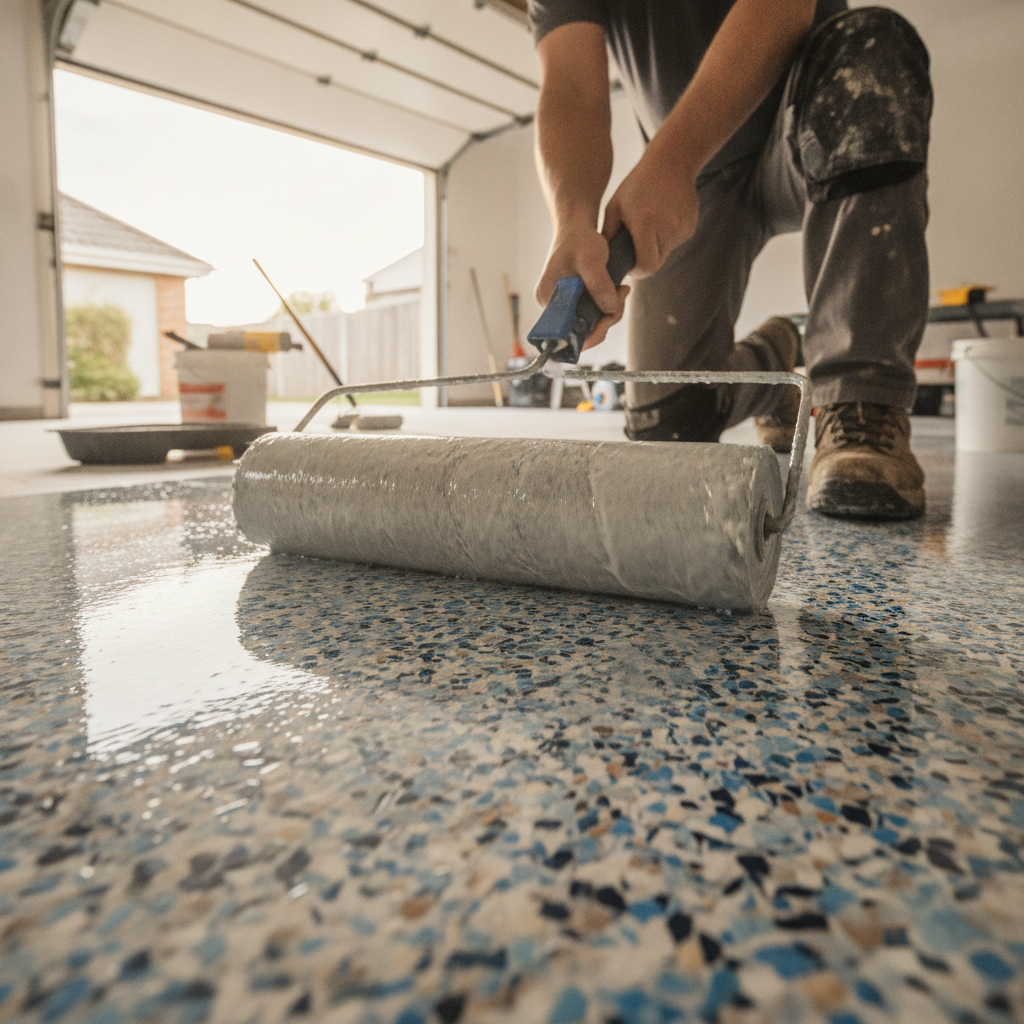
Epoxy floor coatings. A two-part resin system that bonds hard to the concrete and creates a seamless, chemical-resistant surface. Very popular for garages, workshops and warehouse floors. You can add a colour-flake broadcast to this system, which is exactly what Metal and Flake specialises in: vinyl flakes are scattered into the wet epoxy and then sealed with a clear topcoat, giving you a surface that hides tyre marks, resists oil and looks sharp for years.
Polyaspartic coatings. A faster-curing version of polyurethane that can go down in a single day and is ready to drive on within 24 hours. UV stable from the start, so it won’t yellow in direct sunlight the way standard epoxy can over time. Ideal for Melbourne’s variable weather and for jobs where minimal downtime matters.
Metallic epoxy. A specialty finish where metallic pigments are blended into the epoxy to create a flowing, three-dimensional look. Very popular in showrooms, retail spaces and high-end residential interiors. Each pour is unique, which is part of the appeal.
What happens during the concrete resurfacing process?
A professional concrete resurfacing job follows four stages: surface preparation, crack and defect repair, primer or base coat application, and the finish coat or broadcast system. Skipping or rushing any of these stages compromises the end result. On a standard Melbourne garage, the full process typically takes one to two days, with a further day of curing before light foot traffic and up to five days before parking a vehicle.
Here is what each stage looks like on a real job:
Stage 1: Surface prep. This is where most of the time goes. The slab is diamond-ground or shot-blasted to open the surface profile so the coating has something to grip. Any oil contamination is treated with a degreaser and re-ground. The concrete surface profile (CSP) needs to reach a certain roughness, usually CSP 3 to 4 for an epoxy system, before anything gets applied. Skipping this is the number one reason coatings peel.
Stage 2: Crack and defect repair. Cracks are routed out and filled with a polyurea or epoxy filler. Control joints are either filled or left open depending on whether they are live movement joints. Spalled edges and pitting get patched back to level. The floor won’t be perfect, but it should be structurally sound before any coating goes on top.
Stage 3: Primer or base coat. A penetrating epoxy primer is rolled over the prepped slab. This bonds to the concrete and creates the foundation for the build coats. On damp or green slabs, a moisture-tolerant primer is used to avoid adhesion failure further down the track.
Stage 4: Finish system. For a colour-flake epoxy job, a pigmented mid-coat goes down, flakes are broadcast to rejection (meaning you throw them until the surface is fully covered), excess is scraped back, then one or two clear polyaspartic or polyurethane topcoats seal everything in. For a plain epoxy or metallic finish, the process varies slightly but the principle is the same: build in layers, seal at the top.
How long does a resurfaced concrete floor last?
A professionally installed concrete resurfacing system in Melbourne will typically last 10 to 20 years in a residential garage with normal use. Commercial floors under forklift traffic or heavy chemical exposure will see more wear, but a quality polyaspartic topcoat can be refreshed with a new clear coat rather than a full strip and redo, which extends the life of the system considerably.
The honest answer is that longevity comes down to three things. First, how well the surface was prepared. Second, which system was specified for the actual use of the space. Third, basic maintenance: keeping the floor clean, wiping up chemical spills promptly and not dragging sharp metal across it. A concrete resurfacing job treated well will outlast a cheap replacement slab any day.
Epoxy and polyaspartic systems are non-porous, so a mop or a leaf blower keeps them clean. That low maintenance load is one of the main reasons Melbourne homeowners and workshop operators choose a resin system over exposed concrete or tiles.
Is concrete resurfacing the right choice for your slab?
Concrete resurfacing is the right choice when the existing slab is structurally sound but surface-damaged, stained or simply tired-looking. If the slab has major structural cracks, significant heave or is crumbling more than 20 mm deep in patches, a full replacement may be the better call, though that is a decision best made after a proper on-site assessment rather than guesswork.
For the vast majority of Melbourne garages, driveways, warehouses and indoor commercial spaces, the slab underneath is fine. It just needs the right prep and the right coating system. Resurfacing costs a fraction of a full replacement and is typically complete in one to two days, meaning minimal disruption to your home or business.
If you are weighing up whether your slab is a good candidate, the practical checklist is: no structural movement, no rising damp that hasn’t been addressed, no delaminating topping layer, and a surface that can be ground back to sound concrete. Tick those boxes and resurfacing is almost always the smarter and more cost-effective path.
Metal and Flake installs epoxy and colour-flake floor systems across Melbourne and surrounds, including residential garages, commercial warehouses and everything in between. Get a quote for concrete resurfacing near you