Epoxy Flooring Explained: Types, Costs and What to Expect
Epoxy flooring is a hard-wearing, resin-based coating applied directly over a concrete slab. It bonds chemically to the substrate, creating a seamless surface that resists oil, abrasion and heavy foot traffic. Most residential and commercial installs in Melbourne cost between $50 and $120 per square metre, depending on the system chosen and the condition of the existing concrete.
What are the main types of epoxy flooring available?
The most common epoxy flooring systems are solid-colour epoxy, metallic epoxy, decorative flake (also called broadcast flake or chip), quartz-broadcast and self-levelling epoxy. Each system suits different environments and budgets. Flake systems are popular in garages and workshops because the texture adds slip resistance. Metallic epoxy suits showrooms and living spaces where appearance matters most.
Here is a quick breakdown of the four systems you will see quoted most often in Melbourne:
- Solid-colour epoxy. A straightforward two-coat system using a pigmented epoxy topcoat. Clean, affordable and very practical for warehouses and commercial kitchens.
- Decorative flake (broadcast flake). Vinyl flakes are scattered into a wet base coat, then sealed with a clear polyurethane or epoxy topcoat. The result hides minor surface imperfections and adds texture underfoot. This is one of the most popular residential choices in Melbourne garages.
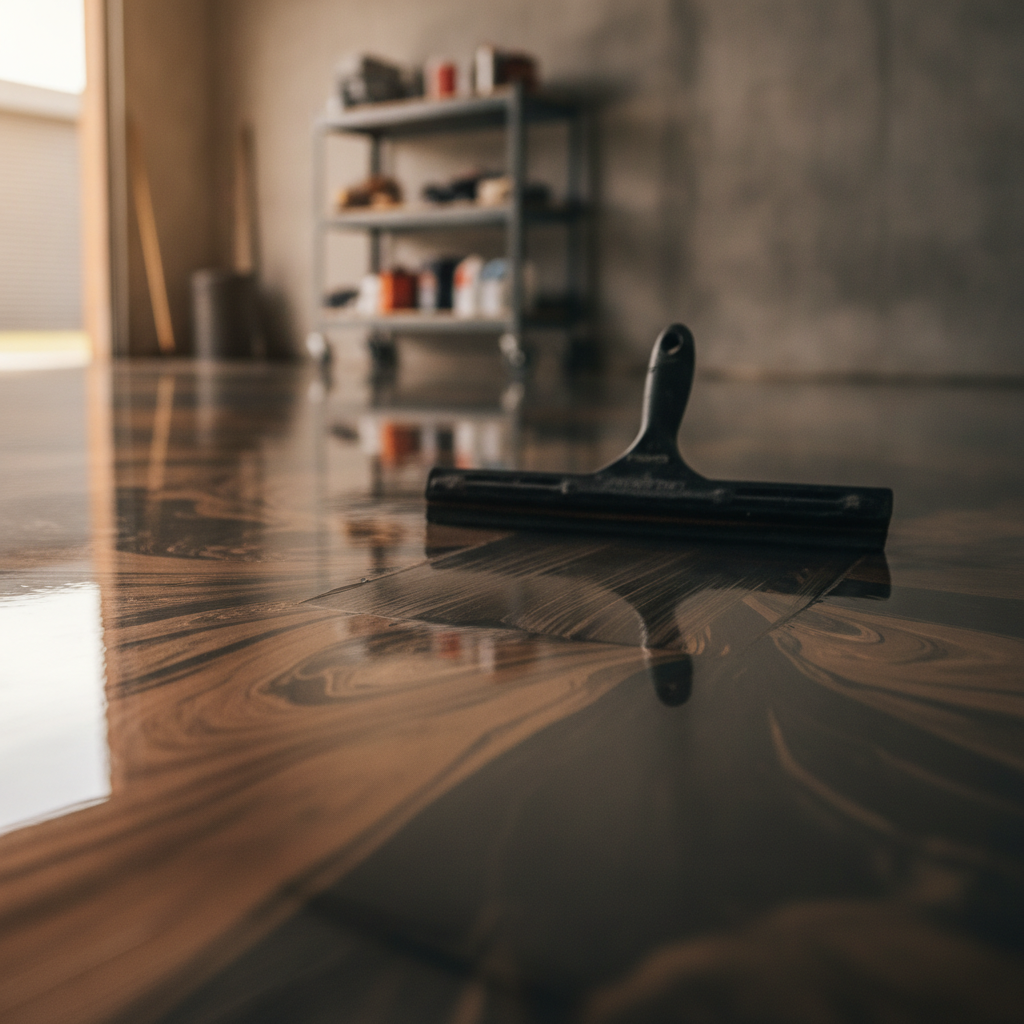
- Metallic epoxy. Metallic pigment powders are mixed into a translucent resin base. The installer manipulates the wet coat with air and squeegees to create flowing, three-dimensional patterns. No two floors look alike. Common in cafes, boutiques and high-end home interiors.
- Self-levelling epoxy. A low-viscosity system that flows across the slab and settles flat under its own weight. Ideal for heavily trafficked commercial and industrial floors where a perfectly smooth, easy-to-clean surface is the priority.
Choosing the right system comes down to three things: how the space is used, how much wear the floor will see, and what finish suits the look you are after. A garage floor that parks two cars and stores a ride-on mower has very different needs from a showroom floor that customers walk through daily.
How much does epoxy flooring cost per square metre in Melbourne?
In Melbourne, epoxy flooring typically costs between $50 and $120 per square metre fully installed, with metallic and designer systems sitting at the higher end. The biggest variable is not the product itself but the concrete preparation required before a single litre of resin hits the slab. Diamond grinding, crack repairs and moisture testing all add time and cost.
Several factors push a quote up or down:
- Concrete condition. A slab with existing coatings, contamination, cracks or moisture issues needs more prep. Proper diamond grinding alone can account for 30 to 40 per cent of the total job cost on a problem slab.
- System complexity. A single-colour base coat and topcoat is faster to install than a full metallic system that requires multiple layers and technique work.
- Square metrage. Smaller jobs (under 30 square metres) often carry a minimum call-out charge that pushes the per-metre rate up. Larger slabs benefit from economies of scale.
- Topcoat choice. Polyurethane and polyaspartic topcoats cost more than standard epoxy clears but offer better UV stability and scratch resistance, which matters for driveways and outdoor-facing spaces.
As a rough guide, a standard residential garage of around 36 square metres with a broadcast flake system and polyurethane topcoat typically lands between $2,000 and $3,200 in the Melbourne metro area. That figure shifts once a tradesperson actually looks at the slab.
What does the epoxy flooring installation process actually involve?
Epoxy flooring installation has three main phases: surface preparation, product application and curing. Preparation is the most important of the three. A coat of epoxy applied to a poorly prepped slab will peel, bubble or delaminate within months. A properly ground, clean and dry slab can hold an epoxy system for well over a decade under normal residential use.
Here is what a professional install looks like from start to finish:
- Site assessment. The installer checks the slab for moisture, existing coatings, cracks and levelness. A concrete moisture test is critical because moisture vapour transmission (MVT) above accepted thresholds will cause adhesion failure. The acceptable limit for most standard epoxy systems is around 75 per cent relative humidity measured in the slab.
- Diamond grinding. A walk-behind or hand grinder with diamond tooling opens up the concrete surface, removes laitance (the weak top layer) and creates a mechanical profile for the epoxy to bond into. This step cannot be skipped or shortcut.
- Crack and joint repair. Cracks are routed out and filled with a semi-rigid polyurea or epoxy filler. Movement joints are typically left open or bridged with a flexible filler to avoid reflective cracking through the coating.
- Primer coat. A low-viscosity penetrating primer is rolled or squeegeed into the prepared slab. This seals the concrete and locks out any residual moisture at the surface.
- Base coat and decorative layer. For a flake system, the pigmented base coat goes down first and flakes are broadcast to saturation while it is still wet. For metallic, the pigment is worked into the resin and manipulated before it sets.
- Topcoat. One or two clear topcoat layers seal and protect everything below. Polyurethane and polyaspartic topcoats cure faster and hold up better under UV than standard epoxy clears.
- Cure time. Light foot traffic is usually possible within 24 hours. Full cure, meaning the floor can handle vehicle tyres and heavy loads without risk of impressioning, takes around five to seven days depending on temperature and humidity.
How long does epoxy flooring last and how do you maintain it?
A professionally installed epoxy floor on a well-prepared slab typically lasts 10 to 20 years in residential settings before it needs a topcoat refresh or full recoat. Commercial and industrial floors under heavy forklift or chemical exposure will show wear sooner, often requiring a topcoat maintenance coat every five to seven years. Correct installation is by far the biggest factor in longevity.
Day-to-day maintenance is genuinely simple. Sweep or blower-vac regularly to remove grit, because fine abrasive particles tracked across the surface act like sandpaper underfoot over time. Mop with a pH-neutral cleaner diluted in warm water. Avoid bleach, ammonia-based products and acidic cleaners, all of which will dull a polyurethane or epoxy topcoat if used repeatedly. Place felt pads under heavy furniture legs and avoid dragging metal objects across the surface.
For garage floors, the main enemies are hot tyre pickup (where a hot tyre bonds briefly to the surface and lifts the coating on departure) and road salts in wet weather. A quality polyaspartic topcoat handles both of these better than a standard epoxy clear, which is one reason polyaspartic systems have become the preferred choice for residential garages over the past several years.
Is epoxy flooring a good choice for Melbourne homes and businesses?
For most Melbourne concrete slabs, epoxy flooring is a practical, cost-effective and visually sharp solution. It suits garages, workshops, commercial kitchens, showrooms, warehouses and living areas laid on slab. The main limitations are that it does not suit timber subfloors, it can be slippery when wet if a smooth finish is chosen without anti-slip additive, and the surface will eventually need maintenance like any other flooring material.
Melbourne’s climate adds one consideration worth knowing. Temperature swings between summer and winter cause concrete slabs to expand and contract slightly. A quality epoxy system applied at the right film thickness with a flexible topcoat handles this movement without cracking. Cheap single-pack floor paints sold at hardware stores do not have the same flexibility or adhesion, which is why they peel and chip within a year or two while a proper epoxy system keeps going.
If you are weighing up epoxy against polished concrete or tile, the main advantage epoxy has is seamlessness. There are no grout lines to harbour bacteria or grime, no joints to trip on, and the surface can be customised to a degree that polished concrete cannot match. The main advantage polished concrete has over epoxy is that it is the concrete itself, so there is no coating to eventually wear through. For a high-traffic commercial floor, the right choice depends on budget, aesthetics and how much downtime you can afford during installation.
Ready to get a straight answer on what system suits your slab and what it will actually cost? Book a consult for epoxy flooring in Melbourne