How Epoxy Coating Transforms a Garage Floor: Step-by-Step
An epoxy coating garage floor transformation works by bonding a tough, resin-based coating directly to prepared concrete, sealing the surface and creating a finish that resists oil, impact, and moisture. The process typically spans one to two days on site, plus cure time, and the result is a surface that looks completely different to bare grey slab.
Why does surface preparation make or break an epoxy coating garage floor job?
Surface preparation is the single most important step in any epoxy coating garage floor project. Without it, the resin has nothing solid to grip and will peel within months. Proper prep removes contaminants, opens the concrete’s pores, and gives the epoxy a mechanical key. Skip this step and even the best product on the market will fail.
Concrete is deceptively porous. Oil from years of parking, tyre rubber, dust and old sealers all sit on and in the surface, blocking adhesion. Before a single drop of epoxy goes down, that concrete needs to be mechanically ground or shot-blasted. Grinding with a diamond-headed machine removes the top layer of the slab and exposes fresh aggregate. You end up with a surface that feels slightly rough, a bit like 80-grit sandpaper, which is exactly what you want.
Any existing cracks or spalling get filled with a polyurethane or epoxy repair mortar at this stage. Leaving cracks unrepaired doesn’t just look untidy. Moisture can travel up through them, pushing the coating off the slab from underneath over time. Patching is a five-minute job that saves a world of grief later.
Once grinding and patching are done, the floor gets a thorough vacuum and wipe-down. Only then is it ready for product.
What actually happens when the epoxy is applied to the garage floor?
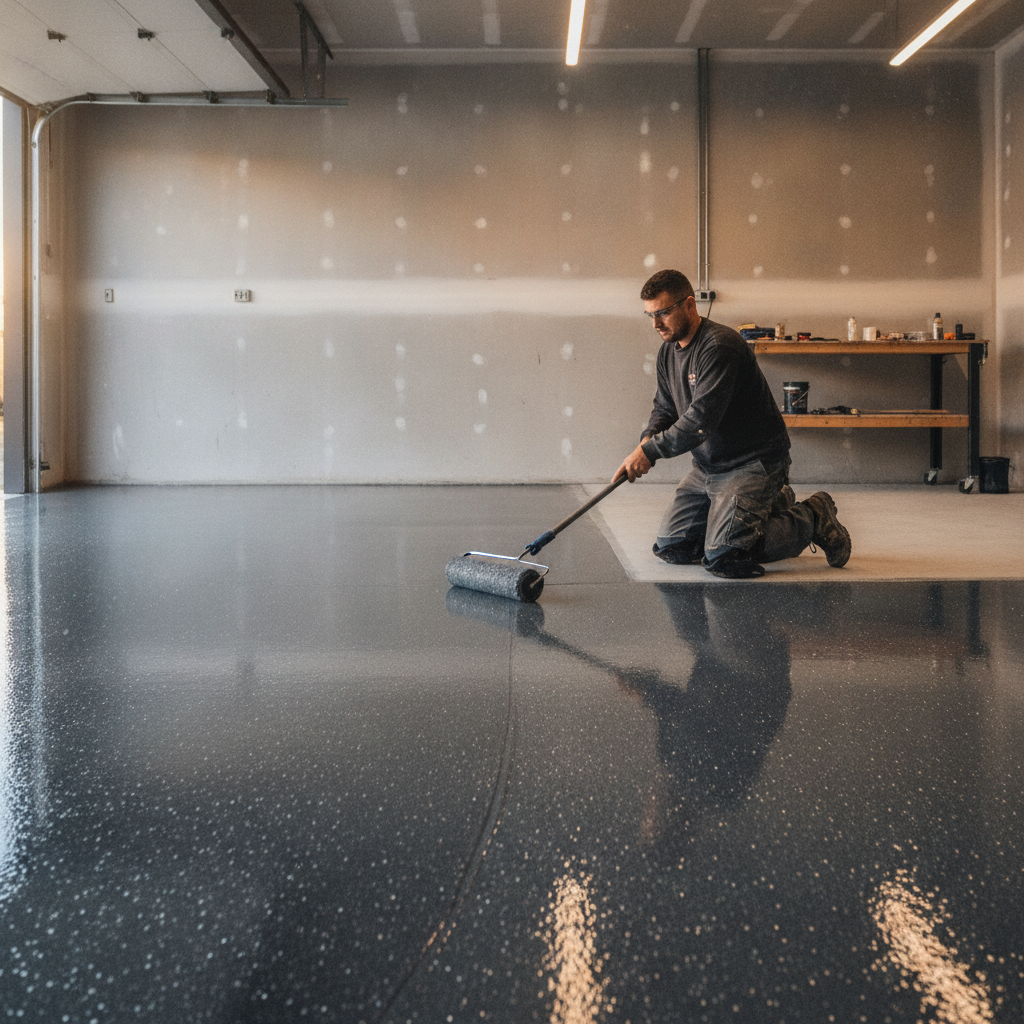
Once the concrete is prepped, epoxy application follows a strict layering sequence. A penetrating primer coat goes down first, soaking into the open pores of the slab and chemically bonding to the concrete. The base coat follows while the primer is still within its recoat window, typically within a few hours, ensuring the two layers fuse rather than just sit on top of each other.
A standard garage epoxy system involves at least two coats: a pigmented base coat and a clear topcoat. Many installations in Melbourne also incorporate decorative colour flakes, broadcast by hand across the wet base coat so they embed into the resin. The flakes do more than look good. They add texture, which improves grip underfoot, and they hide minor surface imperfections that would otherwise telegraph through a plain gloss finish.
Once the flakes are down and the base coat has cured enough to walk on (usually overnight), any excess flake is scraped off and vacuumed up. The clear topcoat then goes over the top, locking everything in. This clear layer is what gives the finish its durability. A quality polyaspartic or urethane topcoat resists UV yellowing, petrol and oil spills, and the scuffing that comes from dragging a jack or rolling a bin across the floor.
Each coat needs to be rolled on quickly and evenly, because epoxy has a pot life, meaning it starts to cure once the two components are mixed. A trained applicator works systematically across the floor in sections, keeping a wet edge to avoid lap marks. This is not a job that rewards hesitation.
How long does an epoxy coating garage floor take to cure before you can use it?
A freshly coated garage floor is ready for foot traffic in roughly 24 hours and for vehicle traffic in 48 to 72 hours, depending on the products used and Melbourne’s ambient temperature. Full chemical cure, where the coating reaches its maximum hardness, takes around seven days. Driving on it before the 72-hour mark can leave tyre marks that won’t buff out.
Temperature matters here. Epoxy cures through a chemical reaction, and that reaction slows down in cold weather. On a winter day in Melbourne where the garage temperature sits around 10 degrees Celsius, cure times can stretch noticeably compared to a warm summer install. Polyaspartic topcoats cure faster than standard epoxy topcoats, which is one reason they’ve become popular for single-day installs where the homeowner needs the garage back quickly.
During the cure window, keep the garage doors closed to limit dust settling into the surface, and avoid dragging anything across the floor. Once fully cured, the surface is hard enough that a dropped spanner won’t chip it under normal circumstances.
What difference does an epoxy coating actually make to a garage floor long-term?
The practical difference is significant and lasting. Bare concrete is porous, so every oil drip, chemical spill and wet tyre leaves a stain that works its way into the slab permanently. An epoxy coating creates a non-porous barrier. Spills sit on the surface and wipe up cleanly with a mop. That alone changes how the garage functions as a workspace.
Dust is another factor that rarely gets mentioned. Uncoated concrete sheds a fine grey dust constantly, especially in older slabs. It settles on tools, cars and storage. A coated floor seals that dust in completely, keeping the space noticeably cleaner over time.
From a visual standpoint, a metallic or flake epoxy finish transforms what feels like a utility space into something that looks intentional and considered. Homeowners who’ve had it done consistently say the garage feels like an extension of the house rather than a shed attached to it. That perception shift matters when you’re spending time working or parking in the space.
On the durability side, a professionally installed epoxy system installed on well-prepped concrete routinely lasts 10 or more years in a residential garage before it needs any maintenance. Compared to painted concrete, which typically starts peeling within two to three years under regular vehicle use, that longevity makes epoxy the more cost-effective choice over a decade.
Is an epoxy coating garage floor a DIY job or does it need a professional?
DIY epoxy kits are available from hardware stores, but the results rarely match a professional install, and the reasons come down to preparation and product. Hardware store kits use water-based epoxy with a much lower solids content than trade-grade two-part systems. They rely on acid etching rather than mechanical grinding for prep, which opens fewer pores and leaves contaminants behind. The coating bonds poorly, and peeling becomes a matter of when, not if.
The grinding equipment alone is a significant barrier. A proper planetary grinder with diamond tooling is a large, heavy machine that requires experience to operate correctly. Running it unevenly leaves high and low spots that show up in the finished coating. Hiring the machine adds cost and still requires knowing how to use it safely.
A professional applicator brings calibrated equipment, trade-grade product and the experience to read the concrete, identify problem areas and adjust the process on the fly. They also handle the waste disposal from grinding and any hazardous material in old coatings. For a garage floor that you want to last the distance, professional application is the reliable path.
If you’re ready to see what a proper finish looks like in your own garage, Book a garage epoxy coating service in Melbourne.