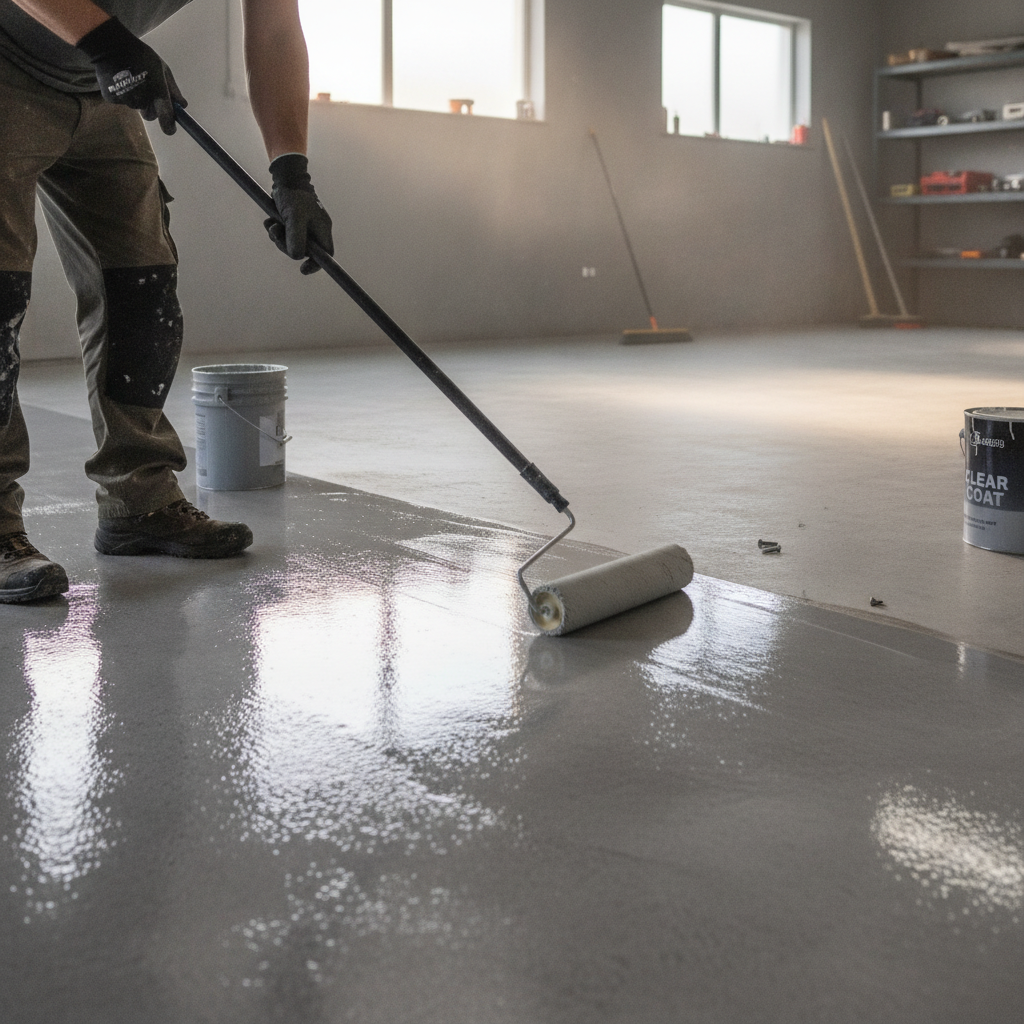
Sealant on Concrete: When to Apply It and What Type to Use
Applying sealant on concrete protects the surface from moisture, staining, and surface wear. The right time to seal is after the concrete has fully cured, typically 28 days for new pours, or after thorough cleaning and repair on existing slabs. The type of sealer depends on whether you need breathability, gloss, chemical resistance, or decorative finish.
Why does concrete need a sealant in the first place?
Concrete is porous by nature. Without a sealant, moisture, oil, and everyday grime work their way into those pores and start breaking things down from the inside. Freeze-thaw cycles, tyre scuffing, and cleaning chemicals all accelerate the damage. A sealer closes off those pores, giving the surface a fighting chance against whatever gets thrown at it day to day.
In Melbourne, the weather alone is enough reason to seal. The city averages around 650 mm of rain per year, and the temperature can swing dramatically in a single afternoon. That constant wet-dry cycling causes concrete to expand and contract, and an unsealed slab soaks up that moisture every time. Over a few years, that leads to spalling, efflorescence (those white salt deposits on the surface), and cracking around the edges.
Beyond protection, a sealer also makes cleaning dramatically easier. Sealed concrete resists oil spills in garages, food stains on entertainment areas, and mud tracked in from the garden. A quick mop or hose-off is usually all it takes.
When is the right time to put sealant on concrete?
The right time to apply sealant on concrete is after the slab has fully cured and the surface is clean, dry, and free of existing coatings or contaminants. For new concrete, that means waiting a full 28 days. For existing slabs, timing depends on weather conditions and surface preparation rather than age.
New concrete is often the trickiest situation. Contractors sometimes push to seal early because it looks tidy, but sealing before 28 days traps moisture inside the slab. That moisture has nowhere to go, and it can cause the sealer to bubble, cloud, or peel within months. Twenty-eight days is the industry-accepted minimum curing time before any coating goes down.
For existing slabs, the timing rules are simpler but just as important. The concrete needs to be bone dry, which in Melbourne usually means at least 48 to 72 hours after rain with no more forecast. Surface temperature also matters. Most sealers have a recommended application window of 10 to 30 degrees Celsius. Applying on a hot 38-degree Melbourne summer afternoon means the sealer can dry too fast, leaving a patchy, uneven film.
If the slab has an existing sealer that is peeling or flaking, that old coating needs to come off completely before anything new goes down. A grinder or chemical stripper is usually required. Applying new sealer over a failing old one is one of the most common mistakes homeowners make, and the result looks worse than leaving it alone.
What are the main types of concrete sealant?
The main types of concrete sealant are penetrating sealers, acrylic sealers, epoxy coatings, and polyurethane topcoats. Each works differently and suits a different situation. Penetrating sealers work below the surface; film-forming sealers sit on top and provide a visible finish layer.
Here is a practical breakdown of the common options:
Penetrating sealers (silane, siloxane, or silicate-based). These soak into the concrete and react chemically with the material itself. They do not change the look of the surface at all, which makes them popular for driveways, paths, and external areas where a natural appearance is preferred. They are also breathable, meaning moisture vapour can still escape from below. This is important for slabs on ground level where rising damp is possible. A good quality silane-siloxane sealer can remain effective for five to ten years before reapplication is needed.
Acrylic sealers. Acrylics are the most widely used film-forming sealer for outdoor concrete. They are affordable, easy to apply with a roller or sprayer, and available in matte through to a moderate gloss. They provide decent protection against UV, moisture, and light abrasion, but they do need reapplying every two to three years on high-traffic surfaces. Solvent-based acrylics tend to penetrate and bond better than water-based versions on rougher or older concrete.
Epoxy coatings. Epoxy is a two-part system (resin and hardener) that creates a thick, hard, highly durable film. It bonds exceptionally well to prepared concrete and delivers strong resistance to chemicals, impact, and heavy traffic. Epoxy is the go-to choice for garage floors, workshops, warehouses, and commercial spaces. It is not UV-stable on its own, so exterior epoxy floors typically need a polyurethane topcoat to prevent yellowing and surface chalk-out from sunlight exposure.
Polyurethane topcoats. Often used over epoxy as a protective and decorative final layer, polyurethane is UV-stable, scratch-resistant, and available in a wide gloss range from satin to high-gloss. On its own, polyurethane can also be applied over properly prepared concrete as a standalone sealer where a tougher, more flexible finish is needed compared to acrylic.
How does surface preparation affect the sealant result?
Surface preparation is the single biggest factor in how well a sealant on concrete performs and how long it lasts. No sealer bonds properly to a dirty, contaminated, or weak surface. Skipping or rushing prep is the main reason sealers peel, bubble, or wear unevenly within the first year.
The minimum prep steps for most concrete sealing jobs are:
- Clean thoroughly. Remove oil stains with a degreaser, scrub away mould or algae with a diluted bleach solution, and pressure wash the entire slab. Allow it to dry completely.
- Repair cracks and spalls. Fill cracks with a flexible polyurethane filler or appropriate concrete repair mortar. Sealing over an open crack does not fix the crack; it just hides it temporarily and usually fails around it first.
- Etch or grind the surface. Smooth, trowel-finished concrete is often too dense for a sealer to grip. Acid etching opens up the surface profile. Mechanical diamond grinding is more consistent and avoids the acid handling risks. Either way, the concrete should feel slightly rough, like medium-grit sandpaper, before any coating goes down.
- Remove any laitance. Laitance is the weak, dusty top layer that forms on concrete as it cures. It looks solid but it has almost no strength and will cause any coating to delaminate if not removed.
For decorative or high-performance systems like epoxy flake floors, the prep is even more critical. Diamond grinding to a concrete surface profile (CSP) of 3 to 4 is typically required to give the epoxy enough tooth to bond without delaminating under traffic.
Is DIY concrete sealing worth it, or should you call a professional?
DIY concrete sealing can be worth it for small, straightforward jobs using penetrating or acrylic sealers on well-prepared surfaces. For epoxy systems, decorative finishes, or any slab larger than a standard garage, a professional application almost always delivers better adhesion, a more even finish, and a longer-lasting result than a DIY attempt.
The honest answer depends on the product and the stakes. Rolling a water-based acrylic sealer over a clean, etched path is within most people’s abilities on a dry day. The product is forgiving, application is simple, and if something goes wrong it can usually be stripped and redone without too much drama.
Epoxy systems are a different story. Mixing ratios need to be accurate. Pot life (the working time before the mixed product starts to cure) can be as short as 20 to 30 minutes in warm weather. Application thickness needs to be consistent, and flake or metallic decorative elements need to be broadcast at exactly the right stage of cure. Get any of those steps wrong and you end up with a costly mess that requires grinding back and starting again.
Beyond the skill factor, professionals also have access to commercial-grade products that are not available at hardware stores. Industrial epoxy formulations typically have higher solids content, better chemical resistance, and stronger adhesion than the DIY kits on retail shelves. The price gap between a professional system and a hardware store kit is narrower than most people expect once you factor in the longevity difference.
If the floor is in a garage, workshop, or commercial space where durability really matters, it is worth getting a professional in to assess the slab condition, recommend the right system, and apply it properly the first time.
Book a concrete sealing service in Melbourne