Epoxy Floor Paint: Is It the Best Choice for High-Traffic Areas?
Epoxy floor paint is one of the most durable surface coatings available for high-traffic floors, but only when the right product is applied correctly. A genuine two-part epoxy coating bonds chemically to concrete, resists abrasion, oil and chemical spills, and can last a decade or more under heavy foot and vehicle traffic. Cheap single-part “epoxy paint” from a hardware store offers far less protection and tends to peel within a year or two.
What actually makes epoxy floor paint different from regular floor paint?
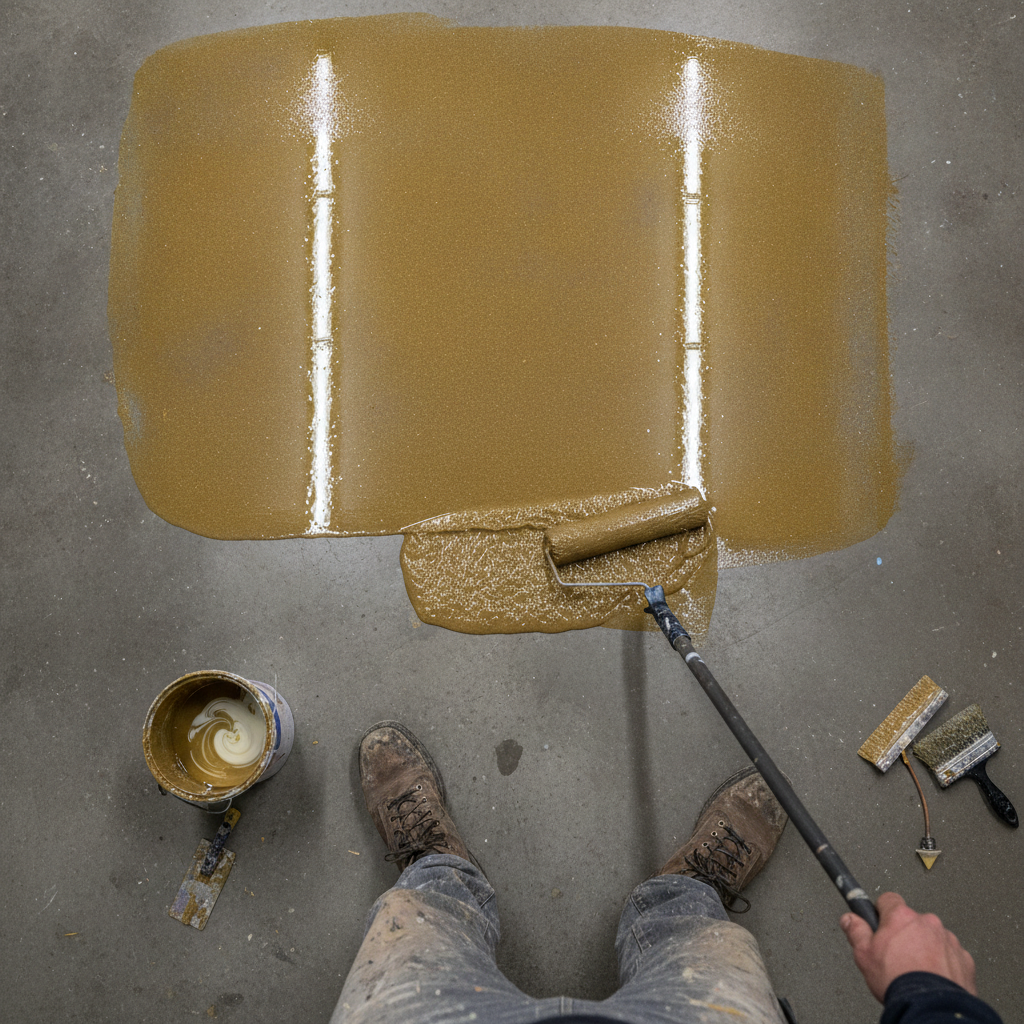
Standard floor paint is a single-component product. You open the tin, roll it on and it dries by evaporation. A true two-part epoxy floor paint uses a resin and a hardener that you mix together just before application. The two components react chemically to form a cross-linked polymer that bonds hard to the concrete surface. The result is a coating that is far thicker, more rigid and more resistant to impact and abrasion than anything that dries by evaporation alone.
That chemical bond is the key difference. Once cured, a proper epoxy coating becomes part of the floor rather than just sitting on top of it. It will not lift at the edges or bubble under heavy trolleys, forklifts or constant foot traffic the way a single-part product eventually will. The trade-off is that mixing ratios matter. Get the ratio wrong and the coating stays soft or goes brittle. That is why surface preparation and mixing discipline are just as important as the product itself.
How well does epoxy floor paint hold up in high-traffic environments?
In high-traffic areas, epoxy floor paint outperforms most competing coatings because its hardness and chemical resistance work together. Abrasion from foot traffic, rubber tyres and dropped tools is handled by the hardness of the cured film. Spills from oils, hydraulic fluids and mild cleaning chemicals are handled by the coating’s near-impermeable surface. These two properties make it a practical choice for garages, warehouses, workshops and commercial kitchens.
To put some numbers to it: a properly applied two-part epoxy system typically achieves a dry film thickness of 200 to 300 microns per coat, compared to roughly 50 to 80 microns for a standard floor paint. That extra thickness translates directly into longer wear life under repeated impact. In a busy residential garage, a quality epoxy floor coating applied over well-prepared concrete will typically outlast a single-part floor paint by five years or more, sometimes considerably longer.
That said, epoxy does have one well-known weakness outdoors. UV exposure causes the surface to yellow and chalk over time. For internal high-traffic areas this is not a concern, but for outdoor aprons or uncovered driveways a polyurethane topcoat is usually applied over the epoxy to protect against sun damage. The combination gives you epoxy’s toughness underneath and UV stability on the surface.
What are the main types of epoxy floor paint used for busy floors?
Not all epoxy floor paint products are the same, and the type you choose makes a real difference in high-traffic settings. Here is a plain-language breakdown of the main options:
Solvent-based epoxy. Strong adhesion, hard cure, suits very dense or contaminated concrete. The fumes during application are significant, so good ventilation is essential. Common in industrial workshops and warehouses.
Water-based epoxy. Lower VOC (volatile organic compound) levels, easier to clean up, faster return to service in some formulations. Adhesion is slightly lower than solvent-based, but for most residential garages and light commercial floors it is more than adequate.
100 percent solids epoxy. No solvent carrier at all. Every drop you apply stays on the floor as cured film, giving you the thickest possible build in a single coat. This is the product used in heavy industrial settings and is the backbone of decorative flake systems where broadcast vinyl flakes are scattered into the wet epoxy before it cures.
Epoxy mortar systems. Epoxy resin mixed with aggregate like sand or quartz. Extremely thick, used to resurface badly damaged or uneven concrete before a topcoat goes on. Relevant if your slab has pitting, cracks or previous coating failures.
Does surface preparation really change how long epoxy floor paint lasts?
Surface preparation is the single biggest factor in how long epoxy floor paint lasts in a high-traffic area. No epoxy, regardless of quality, will perform well if the concrete beneath it is dusty, contaminated with oil, or has not been mechanically profiled to give the coating something to grip. Skipping this step is the most common reason DIY epoxy jobs fail within months.
Mechanical grinding or diamond grinding is the industry standard for preparing concrete before an epoxy coating. It removes laitance (the weak surface layer of concrete), opens the pores and creates a consistent surface profile. The Concrete Surface Profile (CSP) scale used by the industry runs from CSP 1 (very smooth) to CSP 10 (very rough). For most epoxy floor paint applications a CSP of 2 to 3 is the target, roughly the texture of medium-grit sandpaper.
Oil contamination is a separate issue. Oil soaks into concrete over years of use in a garage or workshop and can prevent epoxy from bonding no matter how much you grind. A degreaser treatment followed by acid etching or additional grinding is usually needed to get below the contamination zone. Moisture is another concern. Concrete that is damp or has high moisture vapour transmission will cause blistering under an epoxy coating. A moisture test before you start saves a lot of grief later.
Is epoxy floor paint a DIY job or does it need a professional?
For smaller areas with straightforward concrete in decent condition, a motivated DIYer can achieve reasonable results with a quality two-part water-based epoxy kit. The honest answer, though, is that most of the epoxy jobs that fail early were DIY attempts on concrete that needed more preparation than the homeowner realised or that used a product that was not matched to the traffic the floor would actually see.
A professional applicator brings diamond grinding equipment, moisture testing, the correct product selection for the specific environment, and the experience to catch problems before they become expensive failures. For a busy commercial floor, a warehouse or any space where downtime is costly, professional installation pays for itself quickly. The floor is done right the first time and the warranty (most reputable installers offer one) gives you a clear path if something goes wrong.
Decorative systems like metallic epoxy or vinyl flake floors are also significantly harder to apply well without experience. Getting a consistent broadcast, avoiding lap marks in metallic pigments and achieving an even topcoat all take practice. The results from a professional application are noticeably better than a first-time DIY attempt, which matters if the floor is in a showroom, a retail space or a home interior where appearance counts as much as durability.
What should you ask for when getting a quote for epoxy floor painting?
When you are comparing quotes for epoxy floor painting in Melbourne, the cheapest price is rarely the best value. Ask these questions before you commit:
- What product brand and system are you using, and is it a true two-part epoxy or a single-component product?
- What surface preparation method will you use and what CSP profile are you targeting?
- How many coats are included and what is the total dry film thickness?
- Is a topcoat included and what is it (epoxy, polyurethane or polyaspartic)?
- What warranty do you offer on the coating and the workmanship?
A contractor who can answer all of those questions clearly and specifically is one who knows what they are doing. Vague answers or resistance to the questions is a warning sign worth taking seriously before you hand over your floor.
Epoxy floor paint is genuinely one of the best options for high-traffic areas when the right product is chosen and installed properly over well-prepared concrete. The durability, easy cleaning and long service life make it a practical investment for garages, workshops, warehouses and commercial spaces across Melbourne and surrounds.
Get a quote for epoxy floor painting