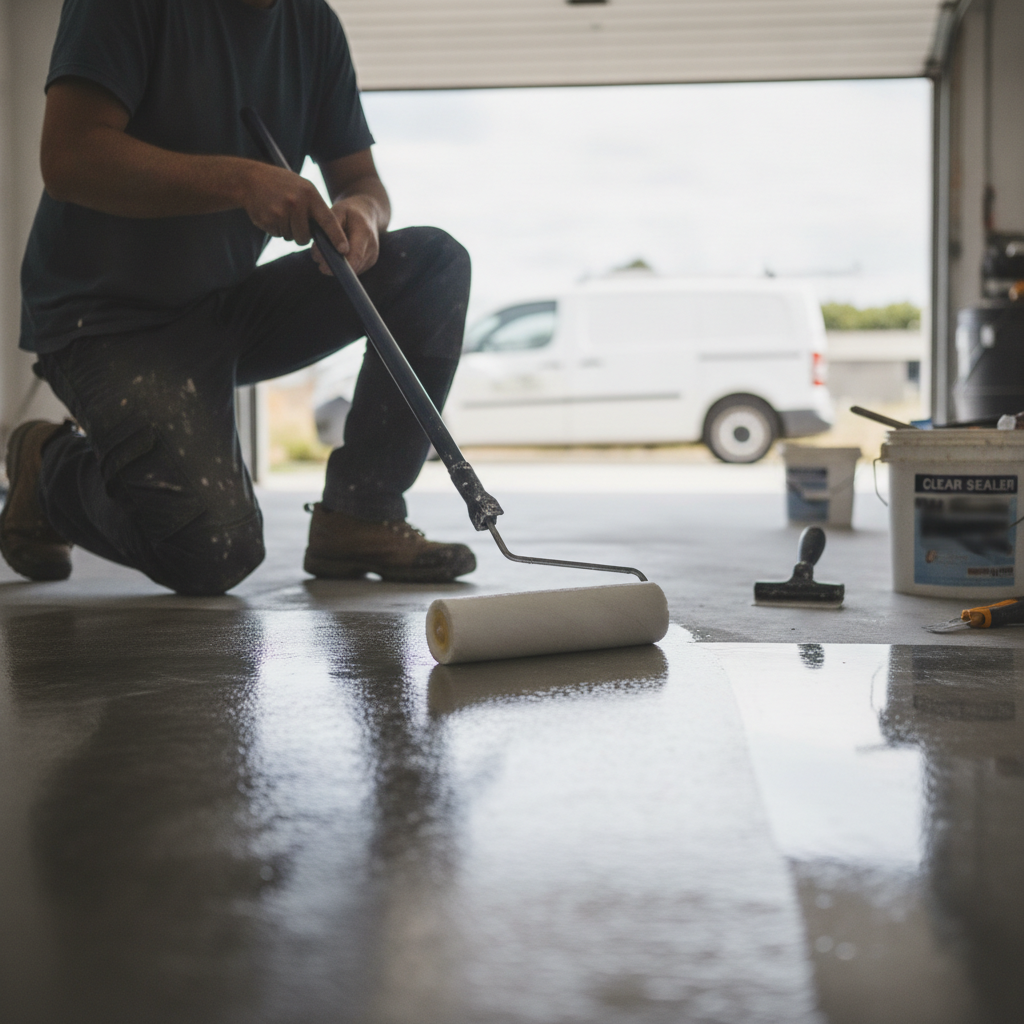
How to Choose the Right Concrete Sealer for Your Property
Choosing the right concrete sealer comes down to three things: what the surface is exposed to, how you want it to look, and how much maintenance you can realistically commit to. Penetrating sealers protect without changing appearance, while topical sealers add sheen and colour depth. Match the product to the job and you get years of protection. Pick the wrong one and you are recoating in twelve months.
What is a concrete sealer and why does your slab actually need one?
A concrete sealer is a protective coating or impregnating treatment applied to cured concrete to stop moisture, oil, salts and UV light from breaking the surface down. Without one, untreated concrete absorbs water, stains from spills and gradually dusts or flakes. A good sealer extends the life of the slab, cuts cleaning time and keeps it looking sharp for years longer than bare concrete ever would.
Concrete looks solid, but it is actually porous. Under a microscope it is full of tiny capillaries that pull in whatever lands on the surface. In a Melbourne context, that means tannin stains from gum leaves in autumn, oil from car tyres on the driveway, salt spray in coastal suburbs and the constant wet-dry cycling that comes with our four-seasons-in-a-day climate. That cycling causes micro-cracking over time, and once water gets in and freezes or just evaporates and re-condenses, you get spalling and surface breakdown.
Sealing closes those capillaries, either at the surface or deep within the slab, depending on the product type. Either way, the result is a surface that repels rather than absorbs.
What are the main types of concrete sealer and which one suits your surface?
The main types are penetrating sealers (silane, siloxane or silicate-based), acrylic topical sealers, polyurethane sealers and epoxy-based sealers. Penetrating products soak in and chemically bond with the concrete, leaving no film on top. Topical products sit on the surface and create a protective film that can range from flat matte to a high-gloss wet look. The right choice depends on the surface location, traffic load and the finish you are after.
Here is a plain-language breakdown of each type:
- Silane and siloxane penetrating sealers. Best for exposed driveways, paths and pool surrounds. They repel water and salt without changing how the concrete looks. Because there is no surface film, there is nothing to peel or delaminate. Ideal for textured or exposed-aggregate surfaces where you want grip to stay put.
- Silicate densifiers. These react with the free lime in the concrete to form calcium silicate crystals inside the slab. They harden and dust-proof the surface rather than waterproof it. Common in warehouses and commercial floors before a topical coating goes on.
- Acrylic sealers. Solvent or water-based, these are the most common DIY product. They go on easily, come in matte to semi-gloss finishes and are affordable. The trade-off is that they need recoating every one to three years and can turn white or peel if moisture is trapped underneath during application.
- Polyurethane sealers. Tougher than acrylics and more chemically resistant. A good choice for garage floors and workshop areas that see fuel, oil or cleaning chemicals. They typically last three to five years on a busy residential floor.
- Epoxy-based coatings and sealers. The most durable option for interior floors. A two-part epoxy bonds hard to the substrate and can carry decorative elements like metallic pigments or colour flakes. These are the go-to for garages, commercial floors and residential spaces where you want a long-lasting, high-performance finish that also looks the part.
How do you match a concrete sealer to the specific conditions of the job?
Match the sealer to the job by asking four questions: Is the surface inside or outside? What traffic or load will it carry? Is moisture coming up from below, across the surface, or both? And what finish is acceptable to the owner? Interior slabs with a moisture vapour problem need a product with vapour-management properties before anything decorative goes on top. Exterior slabs in full sun need UV resistance built into the formula.
A few real-world scenarios make this clearer:
Exposed aggregate driveway. A solvent-based acrylic or a siloxane penetrating sealer works well here. The acrylic brings back the wet, rich colour of the stones. The siloxane keeps it natural-looking and requires almost no maintenance. Traffic is wheels and foot traffic, so either copes fine. Recoat the acrylic every two years or so and it will hold up.
Internal garage floor. This is where epoxy coatings earn their reputation. A broadcast flake or metallic epoxy system gives you a hard, chemical-resistant floor that is easy to hose down and looks far better than bare grey concrete. The floor prep matters enormously here: the slab needs to be mechanically ground or diamond-polished before the epoxy goes on, otherwise adhesion fails and you get bubbles and peeling within months.
Outdoor entertaining area. A penetrating sealer keeps the surface breathable so trapped moisture can escape. If you want sheen, a water-based acrylic over a penetrating base coat is a common combination. Avoid solvent-based acrylics in poorly ventilated outdoor areas during application.
Commercial or retail floor. Polyurethane or a full epoxy system. Foot traffic, trolleys and cleaning chemicals demand something that will not wear through in six months. A two-coat epoxy base with a polyurethane top coat is a popular combination for exactly this reason.
What mistakes do people make when sealing concrete?
The most common mistake is applying a sealer to concrete that is not properly prepared or not fully cured. Fresh concrete needs at least 28 days to cure before sealing. Sealing too early traps bleed water and gases that cause bubbling and delamination. Skipping surface prep, like removing old coatings, oil contamination or laitance, is the next biggest error and leads to adhesion failure no matter how good the product is.
Other mistakes worth knowing about:
- Applying too thick a coat. More is not better with sealers. A thin, even coat cures properly. A heavy coat stays wet in the middle, clouds over or traps air bubbles.
- Sealing over a damp slab. Moisture below the coating has nowhere to go and creates white haze or lifts the film. Always check with a simple plastic sheet test: tape a 600mm square of plastic to the slab for 24 hours and check for condensation underneath before you commit.
- Using the wrong product for the exposure. A water-based acrylic on a driveway in a high-UV Melbourne northern suburb will chalk and peel within a season. A UV-stable solvent-based formula or a penetrating product is a far better call.
- Ignoring the recoat window. Most topical sealers need a recoat before they fully wear through. Once a topical sealer gets patchy, water and oil get into those bare spots and staining begins. Keep a maintenance schedule and stick to it.
How does a concrete sealer compare to an epoxy floor coating?
A concrete sealer and an epoxy floor coating are different products that serve overlapping but distinct purposes. A sealer, whether penetrating or topical, is primarily protective and relatively thin. An epoxy floor coating is a full structural film, typically applied at one to three millimetres thickness, that transforms the appearance of the floor while also sealing and hardening it. Epoxy is the better choice when you want durability, a decorative finish and long-term performance all from one system.
For many Melbourne homeowners and business owners, the decision comes down to budget and expectations. A penetrating sealer on a driveway might cost a few hundred dollars in product and a day of your time. A professionally applied epoxy system in a garage costs more upfront, but you are not recoating every two years and you end up with a floor that genuinely adds to the property. Over a five to ten year horizon, the epoxy system often works out cheaper per year of service.
The other factor is substrate condition. A rough, uneven or heavily stained slab often looks worse under a thin sealer that just highlights the flaws. An epoxy coating applied after proper grinding can level minor imperfections and deliver a clean, consistent finish that a sealer simply cannot match.
If your slab is in reasonable shape and you just need weather and stain protection, a quality penetrating sealer does the job. If you want to upgrade the look and lock in a decade of low-maintenance performance, a professional epoxy system is worth the conversation.
Book a concrete sealing consult in Melbourne