Garage Floor Painting in Melbourne: DIY vs Professional Finish
Garage floor painting means applying a protective, decorative coating to a concrete garage slab. DIY kits from hardware stores cost roughly $150 to $400 and can be applied by a homeowner in a weekend. A professional epoxy or coating system costs more upfront but delivers a harder, thicker, longer-lasting finish that bonds properly to the concrete and resists peeling, hot tyre pickup and moisture for many years.
What does garage floor painting actually involve?
Garage floor painting covers a wide range of products and methods, from thin water-based paints sold at hardware chains through to multi-layer epoxy and polyurethane systems applied by trained tradespeople. The surface preparation, the product chemistry and the number of coats all determine how long the result holds up under daily traffic, chemical spills and Melbourne’s variable humidity.
At the most basic end you have concrete floor paint. It is a pigmented, water-based or solvent-based coating that brushes or rolls onto bare concrete. It looks tidy on day one. The problem is that standard floor paint is thin, typically 50 to 100 microns dry film thickness, and concrete is a porous, alkaline surface that flexes slightly with temperature swings. Paint at that thickness rarely sticks for long without serious prep.
Epoxy coatings are a step up. A true two-part epoxy bonds chemically to the concrete rather than just sitting on top. Applied correctly it can reach 200 to 400 microns or more, handles petrol drips and brake fluid, and takes the heat transfer from hot tyres without lifting. A polyurethane topcoat over the epoxy adds UV stability and a gloss that is easy to mop clean.
Most homeowners searching for garage floor painting are really after that tougher epoxy-style result. Whether they get it depends heavily on preparation and product choice, which is where the DIY versus professional question bites hardest.
How realistic is DIY garage floor painting in Melbourne?
DIY garage floor painting is realistic for a clean, dry, structurally sound slab where the homeowner is prepared to spend a full day on surface prep alone. Most failed DIY garage floor jobs trace back to three avoidable mistakes: skipping acid etching or mechanical grinding, applying product when moisture vapour is rising through the slab, and using a consumer-grade product that simply is not formulated for heavy traffic. In Melbourne’s climate, damp winters add extra risk.
Here is what a diligent DIY process actually looks like:
- Degrease thoroughly. Any oil, tyre rubber or curing compound left on the surface will stop the coating bonding. A dedicated concrete degreaser and a stiff brush, not just a hose, is the minimum.
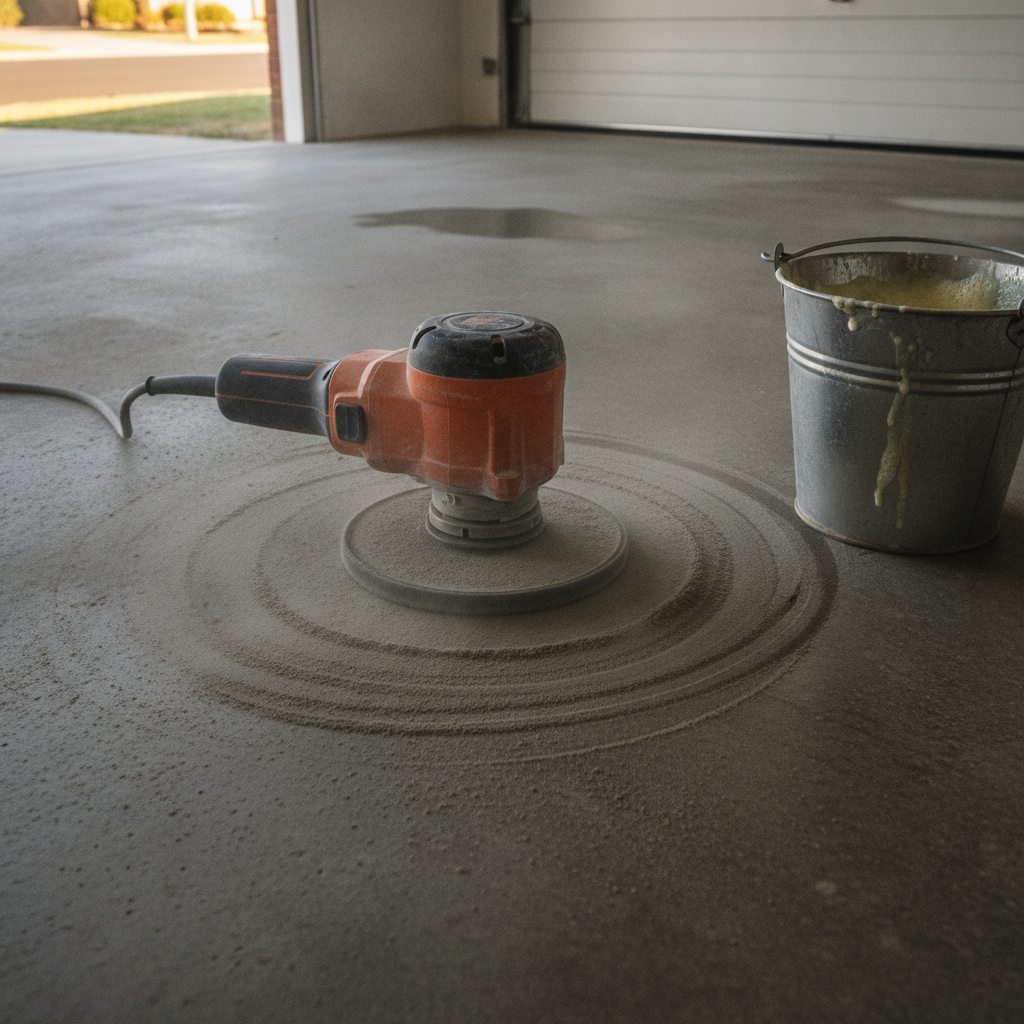
- Open up the surface. Concrete needs a profile for coating to grip. Diluted hydrochloric acid (acid etching) is the standard DIY approach. It works on fresh, unsealed slabs but does not remove contamination that has soaked deep into the pores over years of use. Professional crews use diamond grinders for that.
- Check for moisture. Tape a 600mm square of plastic film to the bare slab for 24 hours. If condensation forms underneath, moisture vapour is migrating up and your coating will bubble and peel within months regardless of brand.
- Mix properly and work fast. Two-part epoxies have a pot life, sometimes as short as 30 minutes once mixed. Running out of working time mid-floor means visible lap lines.
Done right, a DIY epoxy kit can last three to five years in a light-use domestic garage. Done wrong, which covers most first attempts, the coating starts peeling within a season. Budget an honest $300 to $600 for a decent two-car garage kit once you add primer, topcoat, flake broadcast and the prep chemicals.
Where does professional garage floor painting deliver better value?
Professional garage floor painting delivers better value when the slab has years of contamination, when durability beyond five years matters, or when the finish needs to look exceptional. Professionals use equipment and products that are simply not available at retail, and the labour cost buys real expertise in reading concrete conditions before any product goes down.
The key differences in a professional job:
Mechanical preparation. Diamond floor grinders open up the concrete profile evenly and remove surface laitance, old sealers and embedded contamination that acid etching cannot touch. This single step is the biggest reason professional finishes last.
Industrial-grade products. Trade epoxies are formulated to higher solids content than consumer kits. That means more actual resin per litre, a thicker dry film and better chemical resistance. Some systems use moisture-tolerant primers that allow coating on slabs that a DIYer would have to abandon.
Decorative options. Vinyl flake (colour flake) broadcast into wet epoxy creates a speckled finish that hides minor marks between cleans and adds texture for slip resistance. Metallic epoxy creates flowing, marble-like patterns. These finishes are hard to replicate at home because the broadcast technique and the topcoat timing require practice.
Warranty and accountability. A professional installer stands behind their work. If something lifts prematurely because of a product or application fault, there is a path to a remedy. With DIY, any failure is yours to fix.
For a standard two-car Melbourne garage of around 36 square metres, professional epoxy systems typically run from around $1,500 to $3,500 or more depending on the prep required, the product system chosen and the finish style. Spread over a decade of use, that cost per year often compares favourably with a DIY job that needs redoing every two or three years.
What are the most common mistakes that wreck a garage floor paint job?
The most common mistakes that wreck a garage floor paint job are inadequate surface preparation, coating over a damp slab, using a thin consumer paint instead of a proper epoxy system, and not allowing full cure time before driving on the floor. Each of these errors is easy to avoid with the right information, but they are also very easy to make when working from the back of a product tin.
A few that come up again and again in Melbourne specifically:
Painting over a freshly poured or recently rain-soaked slab. New concrete off-gasses moisture for up to 28 days. Even old slabs can be damp after Melbourne’s wet winters. Coating too early is the single fastest path to bubbling and delamination.
Choosing the wrong sheen for a practical space. A high-gloss finish looks stunning in photos but shows every tyre mark and footprint. A satin or textured flake finish is more forgiving in a working garage.
Not masking and edging properly. Epoxy that creeps up the skirting or onto the wall renders look messy and signal an amateur result immediately.
Skipping the topcoat. Bare epoxy without a polyurethane or polyaspartic topcoat yellows under UV light. Melbourne’s sunny summers will fade an unprotected garage floor coating noticeably within a year or two.
Walking on it too soon. Most coatings allow light foot traffic after 24 hours but need 72 hours before any vehicle weight. Parking on a green coating causes permanent indentations.
How do you choose between DIY and professional garage floor painting?
Choosing between DIY and professional garage floor painting comes down to three honest questions: how old and contaminated is the slab, how long do you need the finish to last, and what finish quality actually matters to you. A tidy slab that sees one car and a lawnmower is a reasonable DIY candidate. A garage used as a workshop, a home gym or a showroom for a vehicle collection deserves a professional system.
Run through this quick checklist before you decide:
- Is the slab more than five years old with oil history? Professional prep is almost certainly needed.
- Does the plastic film moisture test show condensation? Either address the moisture source or use a professional with access to moisture-tolerant primers.
- Do you want colour flake, metallic effects or a seamless gloss? These are achievable DIY with practice but look significantly better when applied by someone who does it daily.
- Do you have a full weekend free plus another day for cure? If not, a professional finishes the job in a single visit with minimal disruption.
- Is the garage a selling point for the property? A professionally finished floor photographs well and can genuinely add perceived value at inspection.
There is nothing wrong with a DIY approach on the right slab with the right product. But it pays to be realistic about the prep work involved and the likelihood that a consumer kit will match a trade system in longevity. Most people who have tried both end up preferring the professional route once they have seen the difference up close.
Get a professional garage floor painting quote