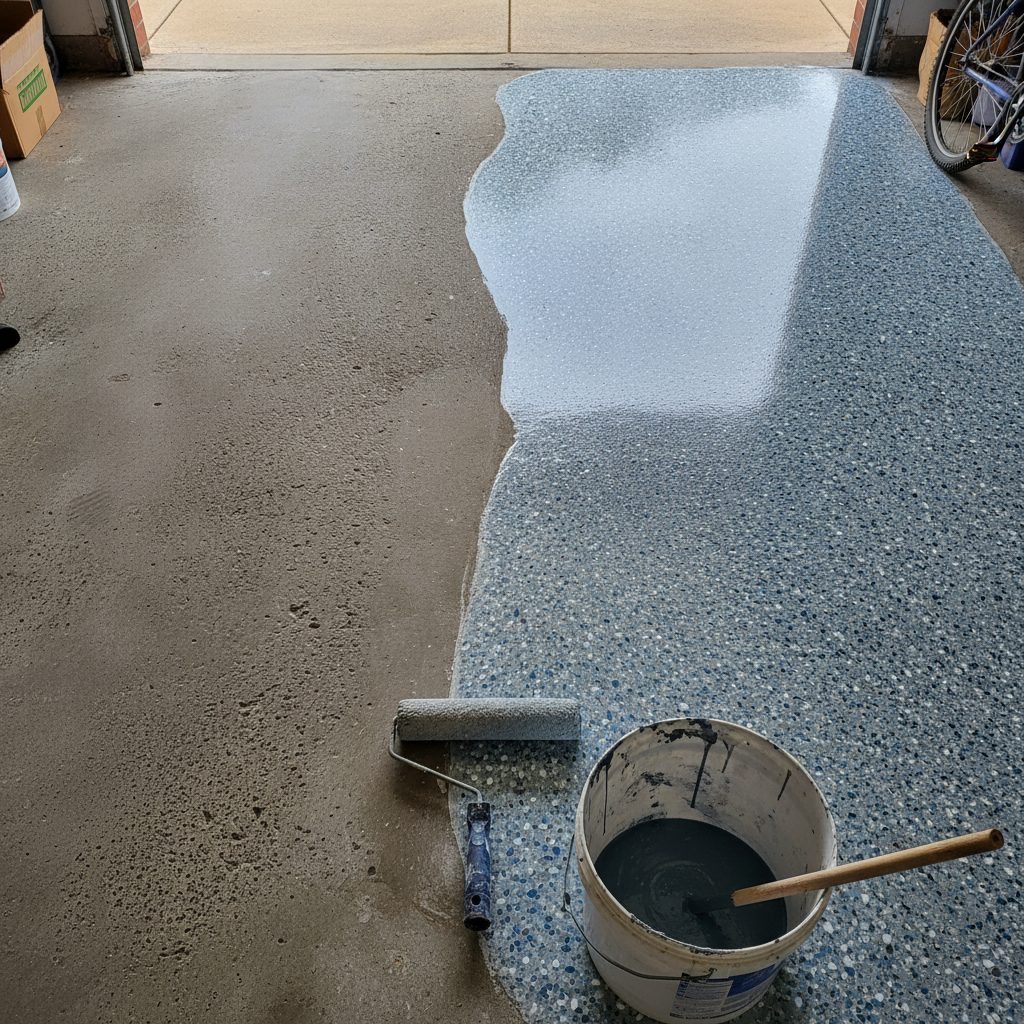
Epoxy Resin vs Epoxy Paint for Garage Floors: Key Differences
Epoxy resin for garage floors is a two-part chemical coating that bonds hard into the concrete surface, delivering a thick, durable shell that stands up to vehicle traffic, oil spills and heavy loads. Epoxy paint, by contrast, is a single-component latex product with a small amount of epoxy resin added for marketing purposes. It sits on top of the concrete rather than bonding into it, and it will peel, chip and fade within a couple of years under real garage use.
What exactly is epoxy resin for garage floors, and how does it work?
Epoxy resin for garage floors is a two-part system: a resin component and a hardener that, when mixed together, trigger a chemical reaction called polymerisation. The result is a rigid, cross-linked plastic layer that mechanically and chemically bonds to the prepared concrete below. Properly applied, it cures to a film thickness of between 300 and 500 microns, which is many times thicker than any brush-on paint product.
The key word there is “prepared.” Before a true epoxy coating goes down, the concrete must be ground or acid-etched to open up the surface profile. That profile gives the resin something to grip. Skip that step and even the best product will eventually lift. This is one reason why professional application consistently outperforms DIY tins from the hardware shop: the prep work is where most of the job lives.
Once cured, a resin-based garage floor coating resists petrol, motor oil, brake fluid and most household chemicals. It handles the point loads from jack stands and the heat cycling that comes with cars being parked after a drive. A quality multi-coat system, including a primer coat, a mid-coat and a clear top coat, can last well over a decade in a domestic garage with normal use.
How is epoxy paint different from genuine epoxy resin coatings?
Epoxy paint is a water-based or solvent-based latex paint that contains a small percentage of epoxy resin, usually around one to two parts resin blended into the formula at the factory. Because the two components are pre-mixed and shelf-stable, no chemical cross-linking happens during application. You are essentially rolling coloured paint onto concrete, not laying down a structural coating.
The practical consequences are significant. Epoxy paint dries to a dry film thickness of roughly 30 to 50 microns, sometimes less. Compare that to the 300-plus microns of a proper two-part system and the difference in physical protection becomes obvious. The thin film cannot handle the abrasion of tyres scrubbing across the surface or the thermal shock of hot rubber sitting on a cool floor. Peeling and bubbling are common within 12 to 18 months, especially in Melbourne’s variable climate where summer heat in an uninsulated garage can push floor temperatures well above 40 degrees Celsius.
None of this means epoxy paint is useless. For a garden shed, a laundry or a workshop that sees very light foot traffic, a quality single-component product can tidy up bare concrete cheaply and quickly. But for a working garage, the economics of peeling and recoating every couple of years usually end up costing more than doing it properly the first time.
Which option is more cost-effective for a garage floor over the long run?
Over a five to ten year period, proper epoxy resin for garage floors is almost always cheaper than repeated applications of epoxy paint. A tin of epoxy paint for a single-car garage might cost $80 to $150 in materials, but factor in the labour of stripping the failed coating, re-etching the surface and repainting every one to two years, and the costs stack up fast. A professionally applied two-part epoxy system costs more upfront but typically requires nothing more than occasional cleaning for many years.
There is also the question of what a failed floor coating does to your concrete. Moisture can get trapped under lifted paint, and over time this can cause surface spalling, especially if there is any hydrostatic pressure from below. Repairing damaged concrete before recoating adds another cost that many homeowners do not anticipate when they grab the cheapest tin off the shelf.
A decorative flake system, which suspends coloured vinyl flakes in a multi-coat epoxy resin build-up, also adds practical value beyond looks. The flake layer creates a non-slip texture that a flat painted surface simply cannot match. In a wet climate like Melbourne’s, that texture makes a real difference when boots are carrying rain or dew into the garage.
What should you look for when comparing epoxy floor products?
The most reliable indicator is the solids content listed on the product data sheet. Two-part epoxy systems typically show solids content of 80 to 100 percent, meaning nearly all of the material applied stays on the floor once the carrier evaporates. Single-component epoxy paints often have solids content as low as 35 to 45 percent, so nearly half of what you roll on disappears into the air as the product dries, leaving a much thinner film than the wet application might suggest.
Also check whether the product requires a separate primer and whether the manufacturer recommends mechanical surface preparation (grinding) rather than just an acid etch. Products that can go straight onto unprepared concrete without a primer are almost always thin-film paints regardless of what the label says about epoxy content.
If a supplier cannot produce a product data sheet that lists solids content, pot life and dry film thickness, that is a strong signal to walk away. Reputable epoxy coating systems come with full technical documentation because the chemistry is well established and the manufacturers stand behind the numbers.
Does concrete condition affect which system is right for your garage?
Concrete condition is one of the most important factors in any coating decision, and it is something many homeowners overlook entirely. Older concrete with surface contamination from years of oil drips, tyre marks and cleaning products needs more aggressive preparation before any coating will bond properly. In some cases, a diamond grinder needs to remove the top layer of concrete entirely to get back to a clean, porous surface.
Newly poured concrete presents a different challenge: it needs to cure fully, which generally takes at least 28 days, before any coating goes over it. Applying a coating to green concrete traps residual moisture, which is one of the most common causes of early delamination regardless of whether the product is a paint or a resin.
Concrete with existing cracks, moisture issues or significant surface damage needs those problems addressed before coating. A crack that is left unsealed will telegraph through even the thickest epoxy coating within months of application. Proper crack filling and moisture testing are standard steps in a professional application process, not optional extras.
The bottom line is straightforward: if you want a garage floor that looks sharp and holds up for years without constant maintenance, two-part epoxy resin is the right tool for the job. Epoxy paint has its place, but a busy garage is not it. Getting the prep right and using the correct system from the start is what separates a floor that lasts from one that peels before the car payments are done.
Book a consult for professional epoxy application