Epoxy Flooring Explained: Types, Costs and Benefits in Australia
Epoxy flooring is a resin-based coating applied over concrete that cures into a hard, seamless surface. It bonds chemically to the slab, making it far tougher than paint. In Australia, it’s used in garages, warehouses, workshops and homes because it resists oil, chemicals and heavy foot traffic while being easy to clean and good-looking.
What are the main types of epoxy flooring available in Australia?
The four most common types of epoxy flooring in Australia are solid-colour epoxy, metallic epoxy, decorative flake (also called chip or broadcast) epoxy, and self-levelling epoxy. Each system suits different spaces and budgets. Solid colour is the most affordable, metallic gives a high-end finish with a marble-like depth, and flake systems offer great slip resistance and hide minor surface imperfections well.
Here’s a quick breakdown so you know what you’re actually looking at when you’re comparing quotes:
Solid colour epoxy is exactly what it sounds like. A primer coat, a pigmented epoxy body coat and a clear topcoat. It’s clean, professional and popular in workshops and commercial kitchens. Colours range from light greys to bold custom tones.
Metallic epoxy uses metallic pigment mixed into the epoxy resin. When it’s spread across the floor, the pigment moves and swirls, creating a three-dimensional, almost fluid look. No two floors are identical. It’s popular in showrooms, restaurants, retail spaces and upscale residential interiors.
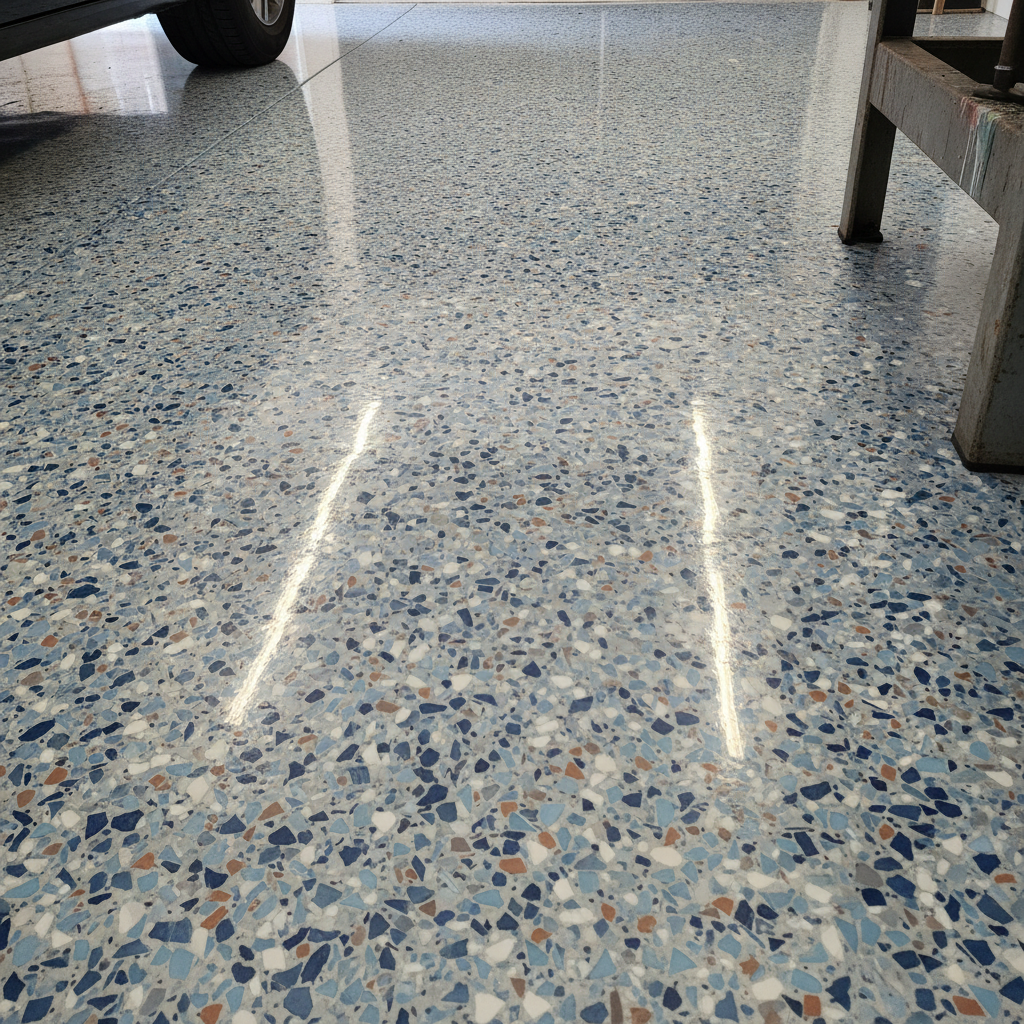
Decorative flake (vinyl chip) epoxy involves broadcasting coloured vinyl flakes into a wet epoxy base coat, then sealing with a clear topcoat. The flakes create texture, which helps with slip resistance, and they can be blended in dozens of colour combinations. This is one of the most popular systems for residential garages across Melbourne.
Self-levelling epoxy is a thicker, pourable product that flows out and levels itself, filling minor cracks and surface variation. It’s the go-to for commercial and industrial floors that need a flat, even finish under heavy machinery or forklift traffic.
How much does epoxy flooring cost in Australia?
Epoxy flooring in Australia typically costs between $30 and $120 per square metre installed, depending on the system chosen, the condition of the existing concrete and the size of the job. A basic single-coat garage floor can sit at the lower end, while a full metallic system with surface preparation and multiple coats will push toward the top of that range.
A few things move the price around more than most people expect:
Concrete condition. If the slab has existing coatings, paint, oil stains or moisture issues, it needs more prep time before anything goes down. Diamond grinding to open up the concrete surface is standard practice for a quality job. That prep work is where a lot of the labour cost sits, and cutting corners here is how floors fail within a year.
System thickness and coat count. A single broadcast flake system with a primer and topcoat is a lighter investment than a full metallic floor with a primer, two colour coats, decorative layer and a heavy-duty polyaspartic topcoat. More coats means more material and more labour time on site.
Square metreage. Larger jobs cost less per square metre because setup, travel and equipment costs are spread across more area. A 20 m² laundry floor will cost more per square metre than a 100 m² warehouse floor using the same system.
As a rough guide for Melbourne homeowners: a standard two-car garage of around 36 m² with a decorative flake system and quality topcoat typically runs in the $1,800 to $3,500 range depending on condition and spec. Get a couple of itemised quotes so you can compare apples with apples, not just the final number.
What are the real benefits of epoxy flooring for Australian homes and businesses?
The main benefits of epoxy flooring are durability, ease of cleaning, resistance to chemicals and oils, improved light reflection and long service life. A properly installed epoxy floor on a well-prepared slab can last 10 to 20 years in a residential setting with basic maintenance, and that makes the cost per year very competitive against tiles, vinyl or polished concrete.
Here’s what actually matters day to day:
It handles the Australian climate. Concrete slabs in Melbourne move slightly with temperature and moisture changes through the seasons. A quality epoxy system applied over a properly prepared and moisture-tested slab flexes enough to stay bonded. This is why moisture testing before installation matters so much locally.
Oil and chemical resistance is real. A properly catalysed epoxy topcoat resists petrol, brake fluid, workshop oils and household cleaners. Spills wipe up without staining. That’s not the case with bare concrete or a cheap single-coat floor paint, which absorbs oil and never quite comes clean.
Slip resistance is manageable. Glossy epoxy can be slippery when wet, but flake systems and anti-slip additives in the topcoat address this directly. A good installer will talk to you about where the floor will be used and recommend the right finish for that environment. A wet area in a commercial kitchen needs a different topcoat spec than a showroom floor.
It brightens up dark spaces. A high-gloss epoxy floor reflects light noticeably. In a garage or workshop that relies on overhead fluorescent lighting, a light-coloured epoxy floor can make the space feel significantly brighter without touching the electrics. This is a practical benefit that people don’t often mention in spec sheets but notice immediately once the floor is done.
Is epoxy flooring a good choice for a Melbourne garage?
Yes, epoxy flooring is an excellent choice for Melbourne garages. It handles vehicle traffic, oil drips and temperature swings well, it’s easy to sweep and hose down, and it transforms a raw concrete slab into a space that looks finished and professional. A decorative flake system is the most popular option because it hides tyre marks and minor scuffs better than a solid-colour finish.
Melbourne’s weather does throw one complication at epoxy installers: the window between too cold and too hot for ideal application is narrower than in warmer states. Epoxy applied when the concrete surface is below 10 degrees won’t cure properly, and if it’s above 35 degrees the pot life shortens fast and you can end up with lap marks. A professional installer monitors slab temperature, not just air temperature, and schedules accordingly. This is one of the clearest separators between a tradie who knows epoxy and one who’s just giving it a go.
Moisture in the slab is the other big one locally. Melbourne’s clay-heavy soils and older housing stock mean plenty of garages have slabs with rising damp issues. A moisture vapour barrier primer addresses this, but only if the installer tests first and specifies the right product. Ask any installer you’re considering whether they test for moisture before quoting. If they don’t, that’s a red flag worth taking seriously.
How do you maintain an epoxy floor once it’s installed?
Maintaining an epoxy floor is straightforward: sweep or vacuum regularly to remove grit, mop with a neutral-pH cleaner and warm water, and avoid dragging sharp metal edges or heavy equipment directly across the surface. Most epoxy floors need no waxing or sealing. The topcoat is the protective layer, and it looks after itself as long as you keep abrasive grit off it and clean up chemical spills promptly.
A few things will shorten the life of an epoxy floor faster than normal wear: leaving car tyres in the same position for weeks at a time (hot tyre pickup is a real issue with lower-quality products), dragging furniture with metal feet across it and using harsh solvents or bleach-based cleaners regularly. None of these are difficult to avoid once you know about them.
If the topcoat does eventually dull or scratch in a high-traffic area, a maintenance topcoat can often be applied over the existing floor without a full strip-back. That’s a much cheaper option than starting from scratch, and a good reason to keep records of what system was originally installed.
Ready to see what’s right for your slab? Get a quote for epoxy flooring in Melbourne