Concrete Floor Paint vs Epoxy Coating: Which Lasts Longer?
Concrete floor paint is a surface-level product that sits on top of the slab and typically lasts one to three years before it chips, peels or fades. Epoxy coating chemically bonds to the concrete and, when applied correctly, lasts ten years or more. If durability is your priority, epoxy wins hands-down. If you just need a quick tidy-up on a low-traffic area, paint has its place.
What exactly is concrete floor paint, and where does it make sense?
Concrete floor paint is a water- or solvent-based acrylic or latex paint that you roll straight onto a prepared slab. It looks neat on day one, costs less per litre than epoxy products, and just about anyone can apply it over a weekend. For a garden shed, a storage room you rarely use, or a temporary fix before a renovation, it does the job. The problem is it sits on the surface rather than bonding into the concrete pores, which means traffic, moisture and UV light wear it away quickly. Most homeowners find themselves repainting every one to two years in a busy garage, which adds up in both time and money.
There is also a practical trap worth knowing about. If you put concrete floor paint down first and later decide to upgrade to epoxy, you have a problem. The old paint needs to be fully removed, usually by grinding, before epoxy can bond properly. Skipping that step is one of the most common reasons epoxy coatings fail early.
How does an epoxy coating actually bond to concrete differently?
Epoxy coating is a two-part system: a resin and a hardener that you mix together just before application. Once combined, a chemical reaction begins that causes the product to cure hard and bond at a molecular level into the open pores of the concrete. It is not sitting on top of the slab. It becomes part of it. That is why a properly applied epoxy coating can handle forklift traffic, chemical spills, and constant foot traffic without peeling or flaking.
Surface preparation is the foundation of that bond. The slab needs to be mechanically ground or diamond-ground to open the concrete pores and remove any laitance (the weak surface layer left after the concrete cures). A minimum surface profile of CSP 2 to CSP 3 is the standard benchmark used in the industry. Skip the prep and even the best epoxy product will eventually lift, usually at the worst possible moment.
Thickness matters too. A typical single-coat concrete floor paint goes on at around 0.1 mm dry film thickness. A quality epoxy system, including primer, body coat and topcoat, can reach 1 to 3 mm or more depending on the system. That extra build is a big part of why epoxy handles heavy use where paint gives up.
Which option is cheaper over the long run?
Over the long run, epoxy coating costs less than repeated concrete floor paint applications. A garage floor painted with a standard acrylic paint product might need recoating every two years. A professionally applied epoxy system in the same garage can last ten to fifteen years with basic maintenance. When you factor in your own time, the cost of paint and supplies each round, and the disruption of clearing the garage repeatedly, epoxy comes out ahead well before the decade mark.
The upfront cost of epoxy is higher, no question. A DIY paint job on a single-car garage might cost a couple of hundred dollars in materials. A professional epoxy floor coating will cost more than that, and for good reason: the prep work alone (grinding, patching, priming) takes real skill and equipment. But you pay once and get on with your life, rather than spending every second spring on your hands and knees with a roller.
There is also a hidden cost people overlook: flooring damage. Paint-covered concrete that chips and flakes can leave bare patches that absorb oil, staining the slab permanently. That can make a future epoxy job harder and more expensive because the contractor needs to deal with contamination before coating.
Does concrete floor paint or epoxy look better in a garage or workshop?
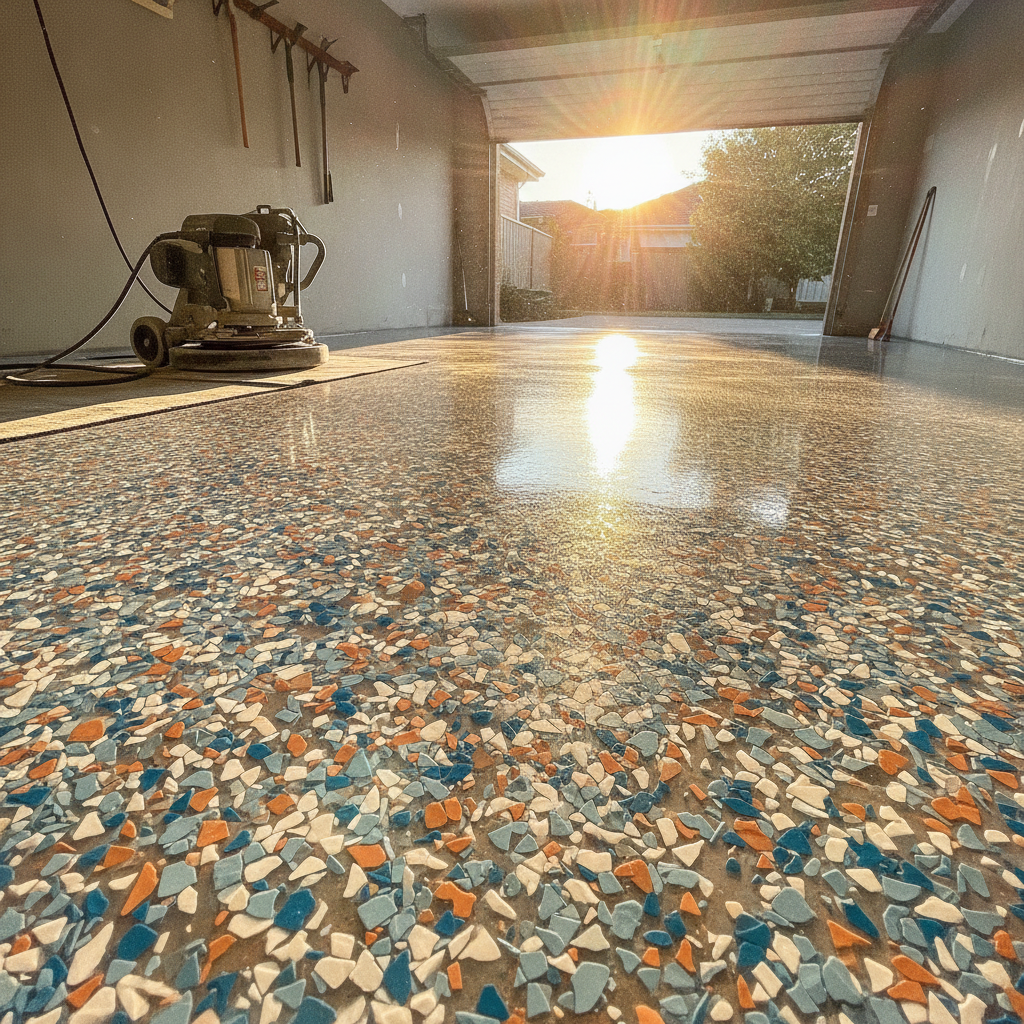
Epoxy gives you far more finish options than standard concrete floor paint. You can go with a solid colour, a metallic finish that shifts in the light, or a flake system where coloured vinyl flakes are broadcast into the wet epoxy to create a terrazzo-like texture. That flake finish is particularly popular in Melbourne garages and workshops because it hides minor dirt between cleans and adds grip underfoot.
Concrete floor paint comes in a limited range of solid colours and has a flat, matte look that tends to look tired quickly as it wears unevenly. There is no real equivalent to the depth you get from a metallic epoxy pour or a full-broadcast flake system. For anyone who cares about how their floor looks in a home gym, showroom or living space, epoxy is the obvious choice.
Gloss level is also controllable with epoxy. A satin or matte topcoat keeps things understated; a high-gloss coat reflects light and can make a dark workshop feel significantly brighter. That is not something a tin of concrete paint can replicate.
What should you check before choosing between paint and epoxy?
A few practical questions help narrow it down fast. First, how much traffic will the floor see? Light foot traffic a few times a week is very different from daily car movements or workshop use. Second, is there any moisture coming up through the slab? Epoxy needs the concrete moisture vapour emission rate to be within acceptable limits, usually below 75% relative humidity within the slab, otherwise the coating can blister. Paint has similar limitations but people notice them less because they expect paint to fail. Third, what is your timeline? Paint is dry to walk on in a few hours. Epoxy needs at least 24 hours before light foot traffic and 72 hours before vehicles, depending on temperature and the specific product used.
If your slab has cracks, spalling or contamination from oil or chemicals, neither product will perform well without proper repairs first. A professional floor coating applicator will assess all of this before recommending a system. That assessment alone is worth a lot, because the wrong product on an unprepared slab is money straight down the drain.
The bottom line is simple. Concrete floor paint is a short-term, low-cost option that works in the right situation. Epoxy coating is a long-term investment that pays off over years of use, looks sharper and handles real-world punishment far better. For most garages, workshops and commercial floors in Melbourne, epoxy is the smarter call.
Get a quote for concrete floor coating