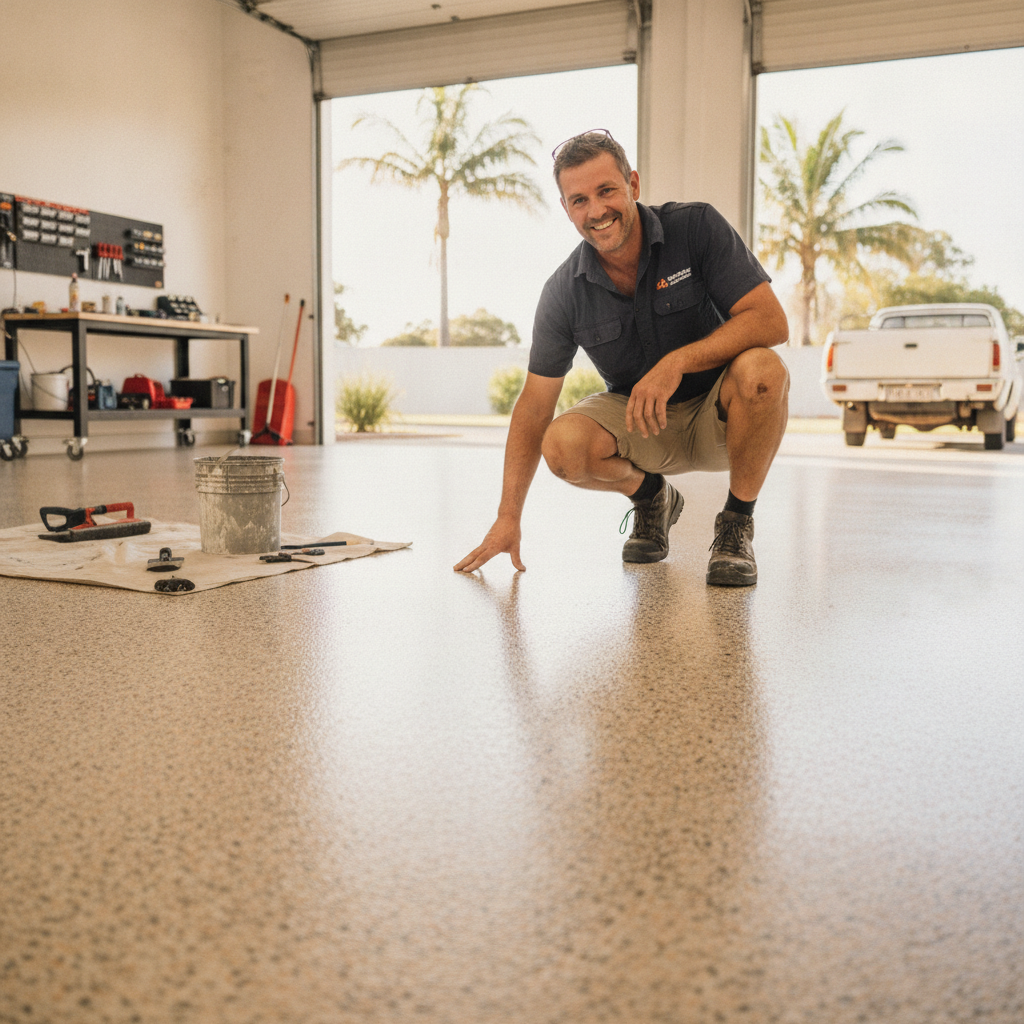
Garage Floor Coating in Sunbury: Your Best Options Explained
Garage floor coating in Sunbury typically comes down to three main systems: solid epoxy, decorative flake (also called chip or broadcast), and metallic epoxy. Each one suits a different combination of budget, foot traffic, moisture exposure and the look you want to wake up to every morning when you open the garage door.
Why does garage floor coating matter so much in Sunbury?
Sunbury sits on the north-western fringe of Melbourne, where summer heat pushes concrete to expand and cool winters pull it back again. Bare concrete that is cycled through that stress year after year absorbs oil, salt and moisture, eventually cracking and spalling. A quality garage floor coating seals the slab, stops that cycle of damage and turns what is usually dead space into one of the best-looking parts of the home.
Beyond protection, there is a real lifestyle argument for coating your garage floor. Sunbury families increasingly use the garage as a workshop, a home gym or an overflow living space. A coated floor is far easier to sweep and mop than raw concrete, resists tyre marks and is noticeably brighter because it reflects light rather than absorbing it. That single change can make a double garage feel like a genuinely usable room rather than a storage dump.
What are the main types of garage floor coating available in Sunbury?
The three most common garage floor coating systems are solid-colour epoxy for a clean, commercial look; decorative flake systems that broadcast coloured vinyl chips into the basecoat for texture and depth; and metallic epoxy, which uses pigment and a translucent topcoat to create flowing, three-dimensional patterns. Each system varies in cost, slip resistance and visual effect.
Here is how each one breaks down in practice:
Solid-colour epoxy is the entry-level professional option. It is a two-part resin and hardener system that bonds chemically to the concrete rather than simply sitting on top of it. Once cured, a solid epoxy floor is hard-wearing and resistant to petrol, brake fluid and most household chemicals. The finish is smooth and glossy, which makes it easy to clean but can be slippery when wet if no anti-slip additive is broadcast into the surface.
Decorative flake systems are the most popular choice for residential garages right now, and it is easy to see why. Coloured vinyl flakes are broadcast into the wet basecoat, then locked in with a clear polyaspartic or polyurethane topcoat. The result is a floor with visible texture, which adds natural slip resistance, and a finish that hides the occasional scuff or dropped tool far better than a solid colour. Flake blends range from subtle neutrals to bold contrasting chips, so there is a palette to suit every home aesthetic.
Metallic epoxy is the premium end of the residential market. Metallic pigments suspended in a clear or lightly tinted epoxy base create swirling, pearlescent effects that look more like decorative stone or water than a painted floor. No two metallic floors are identical, which is part of the appeal. This system requires more skill to apply because the pigment movement has to be guided by the installer, and it is typically finished with a high-build topcoat for durability.
How do you choose the right garage floor coating for your Sunbury home?
The right garage floor coating for your Sunbury home depends on three factors: how the space is used, how much natural or artificial light the garage receives, and your long-term maintenance expectations. High-traffic workshops suit flake systems for their texture and durability; showpiece garages or gym conversions suit metallic finishes for their visual impact; and solid epoxy works well in clean, low-traffic spaces.
Start by thinking honestly about how the garage is used. If there are kids’ bikes, a ride-on mower and weekend mechanical work happening on that slab, a flake system is almost certainly the smartest call. The textured surface hides imperfections, the topcoat handles chemical spills, and the floor cleans up with a quick mop. Installers commonly recommend a minimum of 300 microns of total coating thickness for a working garage, with the clear topcoat making up at least a third of that.
If the garage is a conversion, a showroom for a car collection, or simply a space where you want to make a strong first impression, metallic epoxy is worth the additional investment. The depth of the finish photographs beautifully and holds its lustre for years when a quality polyurethane or polyaspartic topcoat is applied over it.
Lighting matters more than most homeowners realise. A garage with minimal natural light will look dramatically different under a gloss finish compared to a matte one. Gloss amplifies whatever light exists, making the space feel larger and brighter. If your Sunbury garage faces south or has a single small window, a higher-gloss topcoat can genuinely change the feel of the room.
What should you expect during a professional garage floor coating installation?
A professional garage floor coating installation typically takes one to two days from surface preparation to final topcoat, with a further 24 to 72 hours of cure time before you can drive on the floor. The longest and most critical stage is concrete preparation: grinding or shot-blasting the slab opens the surface profile so the epoxy bonds mechanically as well as chemically.
Skipping or rushing surface preparation is the single most common reason garage floor coatings fail prematurely. Peeling, bubbling and delamination are almost always a preparation problem rather than a product problem. A reputable installer will grind the entire slab, repair any cracks or divots with a suitable filler, and check the moisture content of the concrete before a single drop of coating is applied. Concrete with a moisture vapour emission rate above a certain threshold needs a moisture-tolerant primer or the coating will eventually lift.
Once the slab is prepared, the basecoat goes down, the decorative element (flake, metallic pigment or solid colour) is applied, and then one or two topcoats seal everything in. The whole system needs time to reach full chemical cure, which is why most installers recommend keeping cars off the floor for at least 48 hours, even when the surface feels hard to the touch after 24.
How long does a garage floor coating last in Sunbury conditions?
A professionally installed garage floor coating in Sunbury can last 10 to 20 years with basic maintenance, assuming the concrete was properly prepared, a quality coating system was used, and the floor is not subjected to prolonged standing water or heavy point loads like motorbike stands without pads. Polyaspartic topcoats are particularly resistant to UV yellowing, which matters in a west-facing Sunbury garage that catches the afternoon sun.
Maintenance is genuinely straightforward. A weekly sweep and a monthly mop with a pH-neutral cleaner is all most coated garage floors need. Avoid dragging sharp or heavily abrasive objects across the surface, and clean up petrol and oil spills promptly rather than letting them sit. With that level of care, a well-installed flake or metallic system will still look sharp a decade after it went down.
One practical note worth keeping in mind: the concrete under a coated floor continues to move slightly with temperature changes. Expansion joints should never be filled with rigid epoxy. A professional installer will bridge them with a flexible sealant and, if anything, highlight them as part of the design rather than try to disguise them.
Sunbury homeowners who are serious about their garage space deserve a floor that performs as well as it looks. The coating system you choose sets the tone for everything else in the room, and getting it right from the start saves the cost and disruption of doing it twice.
Book Metal and Flake for garage floor coating in Sunbury