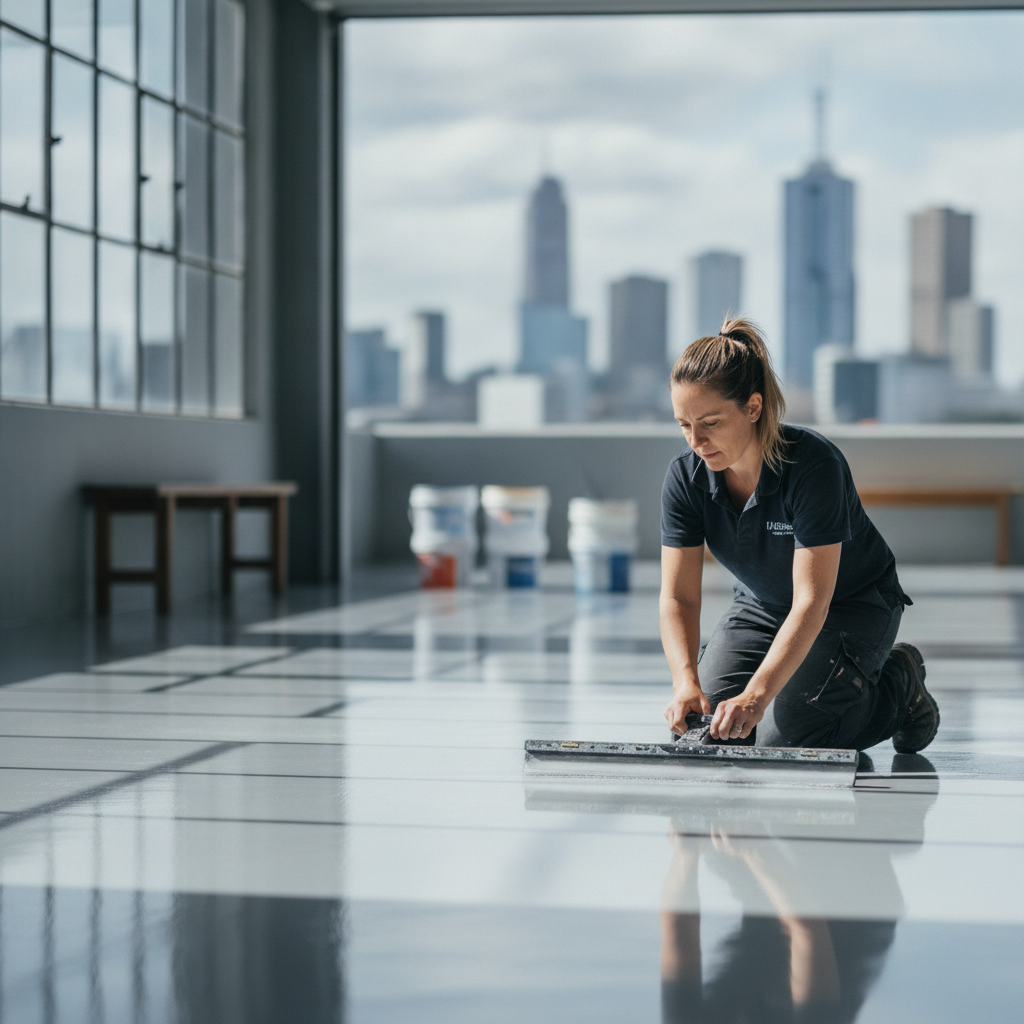
Epoxy Floor Cost in Melbourne: 2026 Pricing Breakdown by Suburb
Epoxy floor cost in Melbourne typically ranges from $50 to $150 per square metre depending on the system chosen, the condition of the existing concrete, and the suburb you are based in. Decorative finishes such as metallic and flake systems sit at the higher end, while single-coat garage coatings start lower. Travel, prep work and floor size all shift the final number.
What factors drive the epoxy floor cost in Melbourne the most?
The biggest cost drivers for epoxy flooring in Melbourne are concrete preparation, the coating system selected, and the total floor area. Surface grinding and crack repairs can add $10 to $25 per square metre before a single coat goes down. Larger floors benefit from economies of scale, which is why a 200 m² warehouse floor often costs less per square metre than a 25 m² garage.
Here is a plain breakdown of the variables that matter most when you are trying to build an accurate budget:
- Concrete condition. Slab age, moisture levels, existing coatings and the presence of oil stains all affect how much mechanical grinding and repair is needed before coating. A freshly poured slab in a new build suburb like Clyde North will generally need less prep than a 1970s industrial floor in Dandenong.
- Coating system. A single-broadcast vinyl flake system uses more material and more labour time than a plain pigmented epoxy. Metallic epoxy systems with their hand-worked, poured finishes are among the most labour-intensive products on the market, which is reflected in the price.
- Floor area. Mobilisation costs (travel, equipment, setup) are largely fixed. Spreading them across 150 m² rather than 30 m² cuts the per-square-metre price noticeably.
- Topcoat selection. Polyaspartic and polyurethane topcoats add durability and UV stability, but they carry a cost premium over standard epoxy clears.
How does pricing vary by suburb across Melbourne?
Epoxy floor pricing across Melbourne suburbs is influenced by travel time from the installer’s base, local demand, and the typical property type in each area. Inner-city and bayside suburbs tend to attract slightly higher rates due to parking restrictions and access challenges, while outer-growth corridors in the south-east and north often offer more competitive pricing because jobs cluster geographically.
As a general guide for 2026, here is how pricing tends to land across different parts of Melbourne:
- Inner suburbs (Fitzroy, Collingwood, Richmond, South Melbourne). Expect $90 to $150 per m² for decorative systems. Access fees and limited parking add to the cost of moving grinding equipment in and out.
- Bayside (Brighton, Sandringham, Cheltenham, Mentone). Residential garages and living space extensions are common here. Budget $80 to $130 per m² for a flake or metallic finish.
- South-east corridor (Dandenong, Hallam, Cranbourne, Pakenham). Industrial and commercial demand is high. Competitive rates of $55 to $100 per m² are achievable at scale.
- North and north-west (Campbellfield, Broadmeadows, Sunbury, Melton). Warehouse and workshop floors dominate. Pricing follows industrial rates of $50 to $90 per m².
- Eastern suburbs (Knox, Ringwood, Boronia, Bayswater). A mix of residential garages and small commercial spaces. Typical range is $70 to $120 per m².
These are indicative ranges. The only number that matters for your project is a firm, site-specific quote.
What does each type of epoxy floor system cost in Melbourne?
Different epoxy floor systems carry different price points because of the materials involved and the installation time required. A standard solid-colour epoxy with a clear topcoat is the most budget-friendly option at around $50 to $70 per m², while full metallic poured systems can reach $120 to $150 per m² or more for complex, multi-layer work. Flake systems sit comfortably in the middle ground.
Breaking it down by system:
- Solid colour epoxy. One or two coats of pigmented epoxy with a polyurethane seal. Practical, durable and well suited to workshops, warehouses and commercial kitchens. Roughly $50 to $80 per m².
- Vinyl flake (chip) systems. Decorative vinyl chips broadcast into a wet epoxy base, then sealed with a clear topcoat. Excellent slip resistance and a clean residential look. The Metal and Flake signature. Typically $70 to $110 per m².
- Metallic epoxy. Pigmented metallic powders worked into a poured epoxy base to create a flowing, three-dimensional finish. Each floor is genuinely one-of-a-kind. Pricing sits at $100 to $150 per m² reflecting the craft involved.
- Polyaspartic coatings. Fast-cure, UV-stable systems often used as a topcoat or standalone finish. They can be installed and walked on in a single day, which suits tight commercial timelines. Expect a 10 to 20 per cent premium over comparable epoxy systems.
Are there hidden costs to watch for when budgeting for epoxy flooring?
The most common hidden costs in an epoxy flooring project are concrete repairs, moisture mitigation and moving costs. Quotes that look low upfront sometimes exclude diamond grinding, filling control joints, or treating rising damp, and those line items can add hundreds to thousands of dollars to a job. Always ask for a fully itemised quote that covers prep, product and clean-up.
A few specific items worth confirming before you sign anything:
- Concrete grinding and preparation. This is non-negotiable for a long-lasting result. Any quote that does not include it should raise a question.
- Crack and joint repairs. Hairline cracks can be filled with epoxy filler at minimal cost. Structural movement cracks may need a flexible polyurethane repair, which takes longer and costs more.
- Moisture testing. Melbourne slabs, particularly in older homes and industrial estates, can hold more moisture than they appear to. A moisture barrier primer adds cost but prevents delamination down the track.
- Furniture and equipment removal. Some installers include this; most do not. Clearing a garage or workshop yourself saves time on the day and can reduce your quote.
- Re-coating or multiple coats. A system quoted at one coat may not perform as well long-term as a two-coat build with a dedicated topcoat. Ask what is included at each layer.
How long does an epoxy floor last, and how does that affect value for money?
A professionally installed epoxy floor in Melbourne typically lasts 10 to 20 years in a residential setting and 5 to 10 years under heavy commercial or industrial use before refinishing is needed. Compared to painted concrete, which may need recoating every two to three years, the cost per year of a quality epoxy system is often lower even when the upfront price is higher.
The longevity of an epoxy floor comes down to three things: the quality of the surface preparation, the quality of the products used, and how the floor is maintained. A properly ground and primed slab with a two-part commercial-grade epoxy and a UV-stable topcoat will outlast a roll-on DIY product by a wide margin. That gap in performance is most visible in high-traffic zones like garage aprons, workshop benches and showroom entries.
For Melbourne homeowners considering a garage floor, a quality flake system installed once and maintained with occasional mopping will almost always represent better value than repeated applications of cheaper alternatives. The same logic applies to cafes, gyms and retail spaces where floor appearance directly affects the customer experience.
What should you ask for when getting a quote for epoxy flooring in Melbourne?
When getting a quote for epoxy flooring in Melbourne, ask for the full system specification in writing: primer type, epoxy product and thickness, topcoat product, number of coats, and what surface preparation is included. A reputable installer will provide all of this without hesitation, and the detail in their quote tells you a lot about the care they will bring to the job itself.
A few practical questions to put to any installer before committing:
- What is the product warranty and what does it cover?
- How many days will the floor need to cure before it can be used?
- Do you carry public liability insurance?
- Can you provide before-and-after photos from a recent similar job in Melbourne?
- What happens if delamination or bubbling occurs after installation?
Getting multiple quotes is sensible, but comparing them is only meaningful when each quote covers the same scope of work. A $60 per m² quote that excludes grinding is not cheaper than an $85 per m² quote that includes full preparation. It just shifts the cost somewhere less visible.
Get an accurate quote from Metal and Flake for your Melbourne epoxy floor project.